

Posted in Travel

Travellin’ Thursday- Willie Smith’s Apple Shed

received_2397288277216558I am going to Europe for a month in mid-May with two girlfriends. I will be doing more serious photography but will also use my Samsung phone for facebook, Instagram and blogging in short spurts. I would like to share some photos with friends and the Penguin will be leaving this page and travelling with me too. I won’t forget him this time. I’m going to be on a tour with 20 people max and going to Spain, Portugal and Morocco.  Mr Penguin is staying home caring for our creatures. We are known for doing “his” trips, “her” trips and “our” trips. He recently did a “his” trip to India, now it’s time for a “her” trip. We will do an “our” trip at the end of the year.  This arrangement is probably why we’ve been married for almost 50 years.received_340757306791783

I have not done blog posts on my Samsung tablet so I am doing it now and seeing how it comes out. I don’t want to take a laptop and download the raw photos and edit, etc while travelling. I think this might work.

There are often times I’d like to write up a quick book post or local adventure at night from the comfort of my bed without firing up the big desktop.

20190410_143019Today we went to Willie Smith’s Apple Shed with two other couples. It is a renovated shed that has an apple museum, cider distillery and restaurant with all local Tasmanian food. It’s great. We sat at big picnic like tables, drank wonderful Tassie red wine (though I was limited as I was the driver) and ate wonderful food. It was a clear, sunny autumn day and we had many laughs. One example was the conversation between two of our friends, one a former Catholic priest who remains very spiritual and the other a devout atheist kept us entertained. It was all very good natured.

Autumn in Tasmania is glorious with the light especially. We don’t get the bright reds and oranges as much as North America but yellows and russets and all shades in between into lighter oranges are beautiful. 20190410_143143

On the way out we picked up some Indian apple  chutney, apple jam and apple brandy of which I have yet to taste. Tasmania is the apple state of Australia and you would not believe how many wonderful varieties of apples there are. Yet our grocery stores seem to sell only about four varieties. The rest are exported all over but mainly to Japan. One must travel to local markets or food stalls to get some of the lesser known varieties. If you look at the photos you can see the apples, yes these are real, with their name printed below each one. Quite amazing really.

I hope this post is formatted okay because if this works I will certainly have more posts to share while on the road. I think I’ve said enough for  Thursday Travel.

Until next time…

received_344353279619767

Posted in Non Fiction

Two Wonderful Photography Books

This past couple of weeks I’ve been reading a fair bit but the books I want to share with you today are in the subject of photography.Snip20190408_5

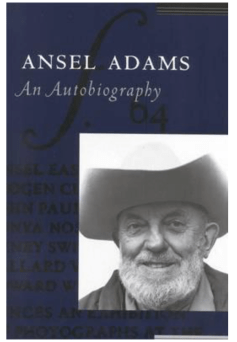
The first one is the Autobiography of Ansel Adams. This book presents the life story of one of America’s best known and most popular photographers and environmentalists of the 20th century. Adams was also a teacher, musician and crusader over the last six decades. He was born in 1902 and lived until 1984. This autobiography came out the year following his death in 1985.

I am in the middle of this book now and am loving it. He was an excellent writer and there doesn’t seem to be a lot he leaves out.  I am also finding the history of California (he grew up in the San Francisco area) fascinating. He talked about the big earthquake and fire of 1905. There is so much that happened during the first 2/3 of the 20th century and he describes it through his eyes.

Snip20190408_8
Ansel Adams

That alone is interesting enough but then he goes on to describe his love of music and studying to be a concert pianist.  The art scene in San Francisco in early 1900s was just brilliant and very energetic.  He hung out with artists, poets and the people who started the Sierra Club. He got to know Yosemite National Park like the back of his hand, long before it was recognised as a national park. He had strong ties to the southwest of the United States.

Some of his descriptions of climbing the rockiest areas in Yosemite carrying his camera and all the gear back in the 1920’s is exhausting. Photography back then was very different than it is now. He studied shapes and lighting more than colour as colour wasn’t possible back then.  The work that was completed in the dark rooms was interesting and difficult. Snip20190408_9

The reader learns of his wife, friends and parents as the years go by.  It is a well written biography and I would recommend it for anyone who loves photography, music, the arts or American history of the western states.


The second book I’d like to share is one by (still living) Joel Myerowitz. The book is called Aftermath.  It is a compilation of photographs from the terrorist attack of the World Trade Towers of New York City of 9/11. The book is a huge, coffee table sized tome that takes two hands to carry it. You need to set it on a table to read it. I don’t usually read anything about that day but this book is important for one reason.  After the attacks happened, New York City officials completely surrounded the site in high fences and secrecy. No photos were allowed.  This day was going to go completely unrecorded photographically.  Mr. Myerowitz spent days making friends with some of the officials

Snip20190408_7
Joel Myerowitz (from his web page)

onsite, especially a group of police officers.  Many of those working the site thought the pictures should be shared. It was almost as if it was being covered up. Eventually as he stalked the area daily, making himself known he began getting into the site and taking the photos of the cleanup that continued for a long time. He donned a hard hat he found, dressed the part, found various pieces of things he could wear from the workers and started photographing various angles of this disaster. He was thrown off the site several times but he kept going back. The photos are amazing and one feels as though they are penetrating all angles of the destruction of so many buildings. There are also quite a few photos of the surrounding buildings with all their windows blown out and missing walls. One can see into all the offices with the missing walls.  The portrait photography of the workers is also very interesting to look at. He captures so much emotion in his photography. Many stories are being told within the site.
Snip20190408_6This book has made me think quite a bit. Had this single photographer not persevered to such an extent the whole incident would have been visually lost. The bureaucracy around the cleanup was quite interesting and I paused many times not believing what I was reading. 

Mr. Myerowitz was born in 1938 in the Bronx, New York and there is a wonderful short biography of his achievements here.  He continues to teach photography. He is well known for his street photography especially and he is on Instagram (here)  if anyone is interested in seeing what he is doing currently.  There is a vast store of knowledge and photographs that can also be searched on google under his name. Snip20190408_10.png

I always think I enjoy reading fiction the most but it seems the older I get the more I enjoy reading non-fiction, especially in learning what so many amazing people, both alive and now gone have given to the world. It is probably a way of distracting myself from the horrible world leaders we seem to have now in so many countries. I wish the good people of the earth got as much media coverage as the awful ones. The world would be a more inspiring place. Snip20190408_11.png

Posted in Fiction

Holiday by Stanley Middleton- 1974 Booker Prize winner.

From Good Reads:

Snip20190401_1HOLIDAY

I have only recently finished reading this book. I heard about on a blog post on Booker Talk some time ago. (Read her review here.) I remember the review appealed to me so I ordered a copy from Abe Books.

From Good Reads description:

Edwin Fisher is on holiday at the English seaside – but this revisiting of childhood haunts is no ordinary holiday. Edwin is seeking to understand the failure of his marriage to Meg, but it turns out that her parents are staying at the same resort – whether by accident or design – and are keen to patch up the relationship. As the past and his enigmatic wife loom larger, deeper truths emerge and the perspective shifts in unexpected ways. This is an extremely subtle story, a consummate portrait of English provincial life told with all Stanley Middleton’s artistry and depth of feeling. It was joint winner of the Booker Prize in 1974. Review quotation: “At first glance, or even at second, Stanley Middleton’s world is easily recognisable…The excellence of art, for Middleton, is an exact vision of real things as they are. And because he is himself so exact an observer, his world at third glance can seem strange and disturbing or newly and brilliantly lit with colour.” (A.S. Byatt).

(From web page Brief Biographies).

The author, Stanley Middleton was British born in 1919 and died in 2009.  He attended schools in Nottingham, England. He had a military career during the second World War serving in the Royal Artillery and Army Education Corps. 

He wrote many short stories and novels with characters mainly being drawn from the middle classes. He enjoyed studying people whose lives had stopped in a middle of a crisis and analysed how they dealt with it. 

Snip20190401_2He wrote about the complexity of the human characters and this comes through in this book. He didn’t believe novels needed to be intense stories but but he certainly created obstacles in the way of his characters. He then devised ways of getting through the issues he raised.

I have only read this one book by him but would not hesitate to look at others he wrote.

I really enjoyed the writing in this book. I thought it was excellent. There were many times when I felt I was standing beside Edwin as he walked the beaches and chatted to the locals.

The story takes place over one week’s time but it seems a much longer period of time. The story goes back and forth from his early marriage days to current days as the protagonist is struggling with a current separation and ‘where to’ from here.

The characters are not always likeable, especially his wife.  I just didn’t see what he saw in her but then as the reading continues the reader understands a physical attraction to her and hope for future changes. Relationships are definitely not straight forward and this book is an excellent example of that.

The interference of his in-laws is aggravating too but many of us married people can understand this happens.  Sometimes trying to sort out marriage issues is impossible to do by oneself. 

I kept reading because I really wanted to know if all of the issues were going to be resolved satisfactorily.  Nothing in this book is tied up neatly.

If a you enjoy a leisurely read where the characters breathe onto the page and you care about them then this book is for you.  

This book shared the Booker Prize along with The Conservationist, by Nadine Gordimer in 1974. Snip20181102_18

(I will add it to my Century of Books which I add to over time very, very slowly.)