For people who read a lot they will probably know this was an important short story in
From Wikipedia
American Literature. It’s first inception was not a film though two films have been made of this story, neither kept to the plot.
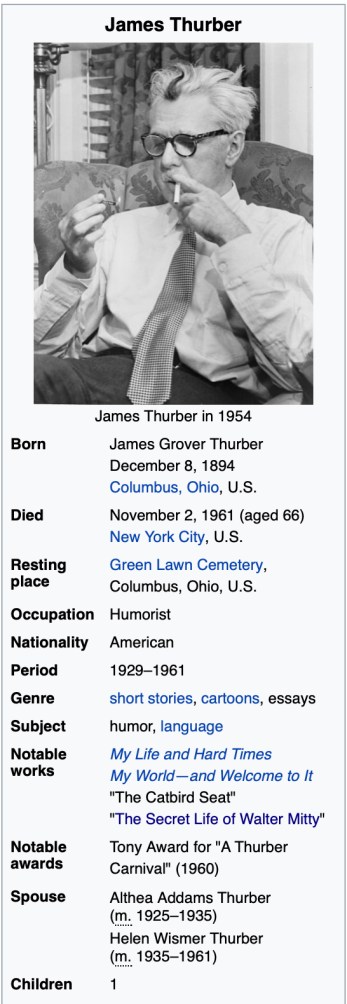
It was written by the wonderful author James Thurber. I love his tales. I have read him off and on for years and he had such a creative, humorous imagination. He was born in 1894, the same year my maternal grandparents were born though they were a few months older than him. He was a cartoonist, humorist, journalist, playwright, children’s book author and wit. He was best known for short stories and cartoons published in the New Yorker. (Wikipedia).
The Secret Life of Walter Mitty was first published in The New Yorker magazine March 18, 1939. It is a story about a man who day dreamed his life away. How often do we do that? I was a great day dreamer especially as I sat in school classes and it never really disappeared much into adulthood.
The story begins in Connecticut with Walter driving his wife into the city to do the shopping and have her hair done. Walter doesn’t pay much attention to the real world, but instead lives in a dreamlike state of heroic antics.
As they drive into town his wife tells him to quit driving so quickly. He goes into his imagination and sees himself as a pilot of a US Navy flying boat in a storm. There is a brief description of this episode of heroism. As they drive past a hospital he suddenly turns into a wonderful surgeon performing the trickiest of operations to save the life of his patient.
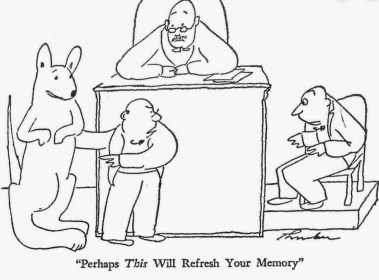
Once past the hospital something else catches his imagination and he becomes a deadly assassin testifying in a courtroom. Soon afterwards he is a Royal Air Force pilot volunteering for a secret suicide mission to bomb an ammunition dumb.
Once the trip into town is complete he sees him self standing against a wall facing a firing squad. Each imaginative event is inspired by some detail of his hum drum life.
James Thurber’s stories and cartoons often displayed meek mannered men dominated by overweight, domineering wives. It seems to be a joke repeated often over time, especially in cartoons.
I remember the discussions of the story as far back as high school as his short stories, this one as well as The Catbird Seat were often taught in high school English classes. I wonder if they still are. I loved him and his stories.
This story begins the exploration of the book, Funny Ha Ha, I talked about in a previous post.
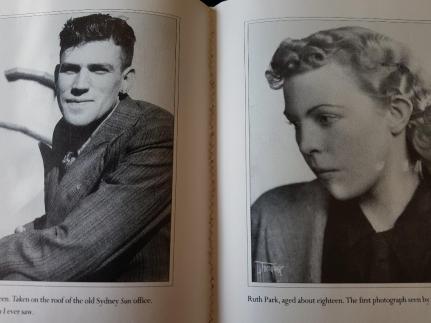
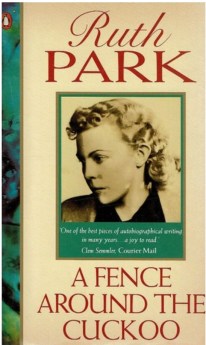
My first book of 2020 is from an Australian female writer of the past, Ruth Park. The book is A Fence Around the Cuckoo, her autobiography of the first 25 years of her life. The remaining years are in a sequel entitled Fishing in the Styx, which I own but have not yet read. Bill Holloway of the AustralianLegend blog is hosting an Australian Women’s Writer week in January (here). I won’t have time to read a lot of the Gen 3 AWWs by mid January but this book qualifies.
Ruth Park was born in New Zealand in 1917 and died in 2010 at the age of 93. Part I of her biography details her first 25 years living in the north island of New Zealand with her large extended family in poverty during the war and depression years. She moved to Sydney in her early 20s where she remained the rest of her life.
She always knew from a very young age she wanted to write. Her parents struggled to ever meet her expectations because of their poverty. Her mother was one of six girls and a couple of brothers raised by Ruth’s grandmother and grandfather. They feature a lot in this story and I enjoyed hearing about their life of squabbles and affection. Ruth lived with a couple of them from time to time when things got too bad.
1992 first published
Ruth didn’t have any access to books at all until she was in her teens. Books weren’t available and neither was paper upon which to write. She talks of one of her uncles bringing home some forms from his office job, that were blank on the back and she thought it was Christmas. She coveted the paper and wrote every chance she got. If the desire to write is genetic she certainly had the gene for it. Her desire was strong.
The book details the type of work her parents and grandparents did, the description of the homes she lived in. Her father had done pretty good until the depression came, he couldn’t work and they lost their home after declaring bankruptcy. The ensuing years were very tough. It wasn’t until WWII when things began to pick up a bit.
I enjoyed hearing about her mother’s seamstress skills and her relationships with her sisters.
Ruth was greatly influenced by one of the nuns where she attended primary school at St. Benedicts. The nun spent a great deal of time with her perfecting her writing skills, working her harder than the other students as she saw Ruth’s potential. As Ruth approached high school age the Sister helped her get a full scholarship for the rest of her school years. I felt excited for her at that point, but sadly the family had to move away due to their financial situation and Ruth never got to take it up. I really felt for her. She was still trying to find books to read without success. Her mother was supportive and wanted her to continue her education but was unable to help her.
Eventually Ruth got a job for the Star newspaper in Auckland, writing in the children’s section. At that time there were sections in newspapers for children of several pages which Ruth loved in her own childhood, if she could get her hands on a paper. During her time at the Star she realises how lowly paid female copy writers were compared to male writers. Most males didn’t believe there was any place for a woman on a newspaper. She was groundbreaking on that front eventually becoming a journalist.
She also met a man from Sydney who worked for newspapers there and they began an uncomfortable pen pal relationship. I say uncomfortable as she thought him a bit arrogant and he was keener to be with her than her with him. Her upbringing was very sheltered and she was also quite an independent child and wanted to remain so because of her own goals in life.
Eventually she moves to Sydney when she is 22 years old as she is offered work on a newspaper there. She learned that women were paid the same as men in copy editing and there were more opportunities. Her relationship with her pen pal D’Arcy Niland, also a writer, developed more and they married not long after she arrived in Sydney.
I found the book interesting as I saw another side of New Zealand indigenous life, the depression years of the 1930s as well as life during the two world wars. I admired her tenacity and independence in staying focused on her goals throughout her young life. Nothing distracted her mentally. The circumstances ruling her life then were so tough.
As far as autobiographies go I really enjoyed this one. I’d like to read more of her books of which she wrote many during her lifetime.
******************************************
I also began the diaries mentioned in the last post as it’s the first of January. I opened my own diary and loved seeing all the blank pages waiting to be filled. What will this year be like?
I thought as I read these diaries during the year I’ll add excerpts that I enjoy from different periods of time into some posts.
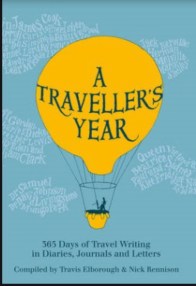
From A Traveller’s Year: “…in the knowledge that no one pines for me anywhere on earth, that there is no place where I am being missed or expected. To know that is to be free and unencumbered, a nomad in the great desert of life where I shall never be anything but an outsider” Isabelle Eberhardt, Diary. 1900.
I’d like to know more of Isabelle’s life. Until next time…..
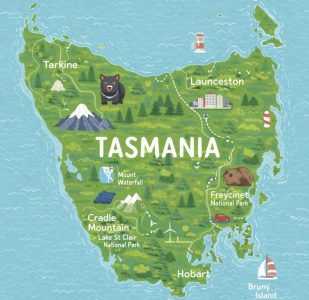
It’s to be 40 degrees C (104 F) in Hobart today. The firefighters are on high alert as a large storm is expected to come through tonight and they are worried about lightning strikes starting fires. The last time Hobart hit 40 degrees C on this date was 1897. Needless to say we are sequestered in the house for the day.
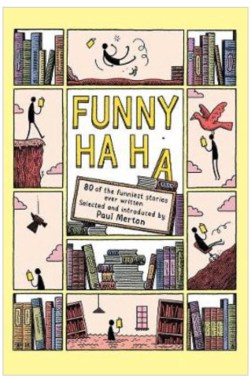
It gives me a chance to finalise my challenges for next year. I am adding two other types of reading in order to diversify the books a bit. I got a book voucher for my November birthday and with it I purchased a very thick book of comical short stories by well known authors. It is called Funny Ha Ha. Authors include the likes of James Thurber, Saki, Spike Milligan, Mark Twain, Joyce Carol Oates and Dorothy Parker to name a few. There are 80 stories in all, of a few pages each. I decided I will randomly pick one story each Monday morning and have programmed that into my phone calendar so I will get a reminder each week.
As New Year’s Day is this Wednesday, I decided to randomly pick a story today and was pleased when my random generator app chose The Secret Life of Walter Mitty by James Thurber.I have read this story before, once assigned in high school and once later on. I also saw the film but didn’t get as much out of that as I did the story. I look forward to reading it again.
The description of Funny Ha Ha states:
“Funny Ha Ha is the definitive collection of comic short stories. From Anton Chekhov to Ali Smith from P.G. Woodhouse to Nora Ephron, the greatest writers are those who know how to laugh. Here, award winning comedian and broadcaster Paul Merton brings together his favourite funny stories of all time. Whether it’s the silly, surreal, slapstick or satirical that makes you smile there’s a story here to tickle every funny bone. From prize-winners and literary giants, to stand up comedians and the rising stars of funny literature, this brilliant anthology is guaranteed to cheer your day. “
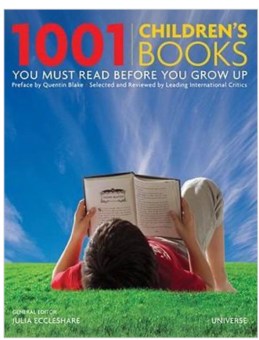
My second challenge is to continue with more of the books from 1001 Children’s Books You Should Read Before You Die. I started it before but it got waylaid. I’m hoping to rejuvenate that project. The only conditions I am assigning this project are I will use the Random Generator app to pick from the 900+ pages of the book and the books must come from the library. I had a quick library search and they do have many of them. However some books are not available. There are quite a few copies that are eBooks I can download and others I need to put a hold on them. I am choosing three books at a time and locating them in the library. I will read them once they become available or I get into town to pick them up. Most won’t take very long to read. I’ve not read children’s books much since I stopped working in the Education department. I like to keep up on children’s books and some young adult books. It keeps me in the loop of what goes on with the younger generations though many of these books were classics when I was young.
I also have some diaries I will try to keep up. They begin on 1 January and I will try to start my day off with the passage of the day. They are books I’ve wanted to read for awhile and if I take a year to read them I might be able to keep up. No promises on this one.
They are:
The Diary of Samuel Pepys (those entries are a bit longer) Everyman’s Library, introduced by Kate Loveman
A Traveller’s Year: 365 Days of Travel Writing in Diaries, Journals and Letters, compiled by Travis Elborough & Nick Rennison
New York Diaries: 1609 to 2009, Edited by Teresa Carpenter.
Dear Los Angeles: The City in diaries and Letters 1542 – 2018, Edited by David Kipen
Books three and four are really interesting. The editors have compiled all the diaries and letters they could find over time, in these locations, and organised the entries from centuries ago; to current day by day of the year beginning with 1 January. So an entry might read: 1 January 1723 and the next paragraph could be 1 January 1802, and so forth. It sounds disjointed but I’ve had a read of these books here and there and they are really quite fun. Of course big events in these two cities are covered but there are also very minor characters who kept diaries and one gets a sense of what daily life’s like at the particular date.
Now I know, come 1 January, I love to take a big bite out of the book world and I am quite enthused now. But I have decided that 2020 is the year I drop way back on social media, except for my photography work and instead of wasting time looking at FB, Instagram and You Tube, I’m going to immerse myself in the books I have been collecting for decades and then moving them on. Wish me luck. (I know, I have an inflated sense of self and a very good sense of humour.)

 Once past the hospital something else catches his imagination and he becomes a deadly assassin testifying in a courtroom. Soon afterwards he is a Royal Air Force pilot volunteering for a secret suicide mission to bomb an ammunition dumb.
 It’s to be 40 degrees C (104 F) in Hobart today. The firefighters are on high alert as a large storm is expected to come through tonight and they are worried about lightning strikes starting fires. The last time Hobart hit 40 degrees C on this date was 1897. Needless to say we are sequestered in the house for the day.
 forward to reading it again.
 I also have some diaries I will try to keep up. They begin on 1 January and I will try to start my day off with the passage of the day. They are books I’ve wanted to read for awhile and if I take a year to read them I might be able to keep up. No promises on this one.
 Carpenter.

 Travellin' Penguin