
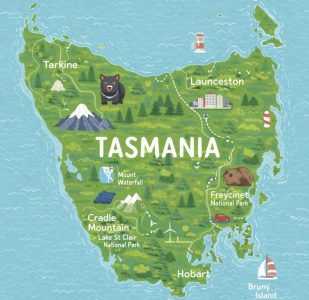
It’s a rainy day in Hobart and the news reported this morning that we should be prepared to be stopped by either the police or the defence forces if we venture out in our car. We will be asked where we are going and if it isn’t essential, fines may be imposed or we might spend up to six months in jail. I wonder where they will put everyone if everyone goes to jail. Mr. Penguin and I are getting into a pretty steady routine. Books, garden work, Ollie exercise, animal care of two dogs and three indoor cats, writing, studying and a bit of Netflix. I had to take Ollie for a long walk yesterday because a 7 month Jack Russell goes ballistic without exercise. Our local pub, the Cascade Pub is selling takeaway meals from Wednesday to Sunday and we took advantage of that last night, to have a break in routine and to support them. It is quite interesting how one can establish new routines if only they are open to change. I must say I am enjoying the amount of free time not having to run around and quiet interludes when I want to read. I hope everyone out there stays healthy and keeps an open mind about these things.
So onward and upward, keep calm and all that…..today we talk about B books.
Bb
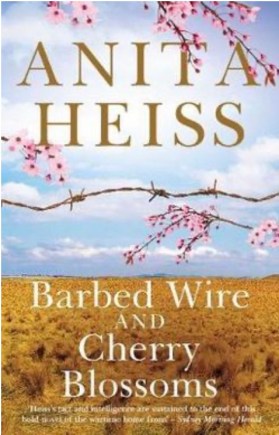
1* Barbed Wire and Cherry Blossoms (2016) by Anita Heiss (b. 1968 Australian). I acquired this book only recently when a couple of Aussie book bloggers spoke highly of her work.
Dr Anita Heiss is the author of non-fiction, historical fiction, commercial women’s fiction, poetry, social commentary and travel articles. She is a regular guest at Writers festivals and travels internationally performing her work and lecturing on Aboriginal Literature. She is a lifetime ambassador of the Indigenous Literacy Foundation and a proud member of the Waradjuri Nation of Central New South Wales. (information taken from her web page)
The blurb on the back describes it: “Over 1000 Japanese soldiers break out of the No. 12 Prisoner of War compound on the fringes of Cowra, New South Wales. In the carnage, hundreds are killed, many are recaptured and some take their own lives rather than suffer the humiliation of ongoing defeat. But one soldier, Hiroshi, manages to escape.
At nearby Erambie Station, an Aboriginal mission, banjo Williams, father of five and proud man of his community discovers Hiroshi distraught and on the run. Unlike most of the townsfolk who dislike and distrust the Japanese, the people of Erambie choose compassion and offer Hiroshi refuge. Mary, Banjo’s daughter, is intrigued by the softly spoken stranger, and charged with his care. “ This is their story.
 2** Between Mexico and Poland (2002) by Australian/American author Lily Brett. I have written about her books in the past as she is one of my favourite authors. I especially enjoy her biographical tales of growing up in Melbourne with parents who survived Auschwitz. She is now a long time New Yorker residing in New York City.
This book refers to her time in Mexico and Poland. The blurb on the back states, ” In Mexico, she tries to write a novel, while the toilet explodes in the house, the gardener hoses her notes and the young maid questions her about plastic surgery. In Poland she retraces the steps of her much loved character from Too Many Men, Ruth Rothwx, and finds herself surprised to hear Ruth’s words coming out of her own mouth. In between she writes for the first time about the devastation of losing her New York home to fire and having to rebuild not only a life but a history. She also offers over insights into her adopted city New York, both before and after the tragic events of September 11. “
There is always quite a bit of humour and some cynicism in her books that I think make her an interesting woman.
 3*** Before the Coffee Gets Cold by Toshikazu Kawaguchi (2019). Okay, I admit it freely. I bought this book because I loved the cover illustration. I loved the title and I loved that it is by a Japanese writer which always gives an interesting experience. I really do like everything about the Japanese culture. In this book it states: “In a small back alley in Tokyo, there is a cafe which has been serving carefully brewed coffee for more than one hundred years. But this coffee shop offers its customers a unique experience: the chance to travel back in time.
We meet four visitors, each of whom is hoping to make use of the cafe’s time travelling offer, in order to make use of the cafe’s time travelling offer, in order to confront the lover who left them, receive a letter from their husband whose memory has begun to fade, see their sister one last time and meet the daughter they never got the chance to know.
But the journey into the past does not come without risks: customers must sit in a particular seat, they cannot leave the cafe, and finally they must return to the present before the coffee gets cold.
The author explores the age old question of what would you change if you could travel back in time.
Well that is another day completed. I might add before I get too far into this April project that I tend to buy books that I have a feeling for when I handle them. I know, I know. Sound a bit silly but I have never been one to follow the award winners, the popular, the books everyone is talking about. I get burned out quickly from books that have too much hype around them, no matter how good they may be. I like stories, authors, characters that go to fascinating countries, have remarkable experiences, have a different point of view to mine (unless they are right wing fundamentals which I won’t touch or I should say I’ll listen to them but only once and usually dismiss the craziness of most of them. Think American Republican Party or gun control lobbies. But I digress.)
I like to scrounge through the shelves of both new and second hand book stores and look for something maybe really old or very different or something I’ve never heard of. I’ve been known to go to the library, walk down a row of shelves with eyes closed and pull something off the shelf and not look at it until I get home. I’m sure there are other bookish friends out there who know exactly what I’m talking about. So until tomorrow.

 1. An Accommodating Spouse (1999) by Australian author Elizabeth Jolley (4 July 1923 – 13 Feb 2007). While I have read a couple of her other books this is one that remains unread on my shelf.
 2. All The Books of My Life (1956) by Sheila Kaye- Smith (British 4 Feb 1887-14 Jan 1956). Kaye-Smith’s fiction was noted for being rooted in rural concerns: the nineteenth-century agricultural depression, farming, legacies, land rents, strikes, the changing position of women, and the effects of industrialisation on the countryside and provincial life.
 3. Another unusual Australian book is entitled Angel of Death (2019) by author Leigh Straw. It is described as Dulcie Markham, Australia’s most beautiful bad woman. Leigh Straw is an academic, historian and writer. She is passionate about telling Australian stories. Some of her other books are The Worst Woman in Sydney; The Life and Crimes of Kate Leigh (2016); After the War: Returned Soldiers and the Mental and Physical Scars of WW I (2017); and Lillian Armfield: How Australia’s First Female Detective Took on Tilly Devine and the Razor Gangs and Changed the Face of the Force. Leigh is a Senior Lecturer in History at the University of Notre Dame Australia at the time of this printing.
 It’s a funny day. I wonder what all my blogger friends are doing and I imagine you’re all quarantined at your homes. Isn’t it odd to think of the whole world (almost) doing the same thing!

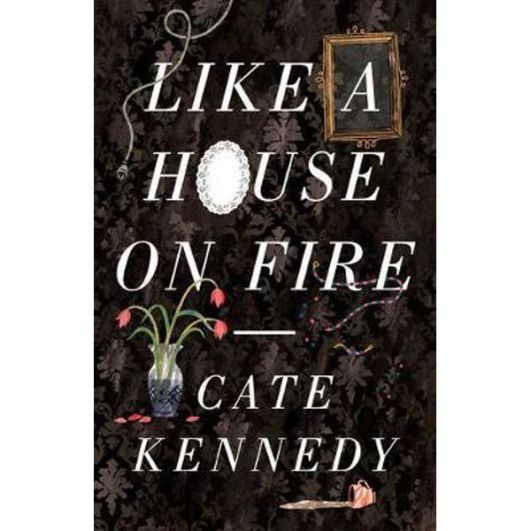 From prize-winning short-story writer Cate Kennedy comes a new collection to rival her highly acclaimed Dark Roots. In Like a House on Fire, Kennedy once again takes ordinary lives and dissects their ironies, injustices and pleasures with her humane eye and wry sense of humour. In ‘Laminex and Mirrors’, a young woman working as a cleaner in a hospital helps an elderly patient defy doctor’s orders. In ‘Cross-Country’, a jilted lover manages to misinterpret her ex’s new life. And in ‘Ashes’, a son accompanies his mother on a journey to scatter his father’s remains, while lifelong resentments simmer in the background. Cate Kennedy’s poignant short stories find the beauty and tragedy in illness and mortality, life and love.


 Travellin' Penguin