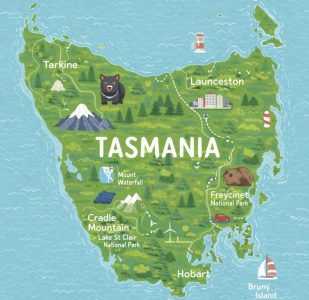
 The weather in Tassie has been ridiculous. On Friday it was 41C (104F) and tomorrow there is a prediction for snow in this state. Today is very windy so I haven’t ventured out as there are so many gum trees around our house I hate walking in the wind. Gum trees are known as “widow makers” due to branches falling from the trees more easily than from other trees or the entire tree comes down due to their shallow root system. So I am not doing much dog walking this weekend with little Ollie.
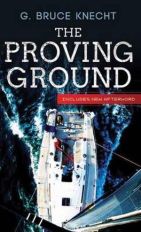
Instead I received this book about the 1998 Sydney to Hobart Yacht race where a very freakish Hurricane like weather system arose in Bass Strait and six sailors were killed in the race. As much as I don’t like being on boats or ships in the ocean due to a number of reasons I have always enjoyed tales of the open ocean. I’ve read several ocean books about storms, solo races around the world or books about people who live on yachts and travel the world. I find it fascinating but my pleasure is only gained vicariously.
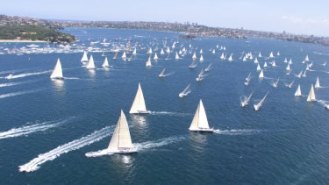
In Australia on every Boxing Day (26 December) there is a yacht race that begins in Sydney Harbour and races south to Hobart in Tasmania. Crossing Bass Strait between Tasmania and the mainland can be extremely gruelling due to the weather patterns and currents that are liable to come from many different directions and meet there. I have crossed Bass Strait only four times on the overnight car ferry between Devonport in Tasmania’s northwest and Melbourne. I’ve had three quite smooth crossings but one crossing was like sitting in a loaded washing machine on a spin cycle that I don’t like to think of. I spent the entire night on the bathroom floor.
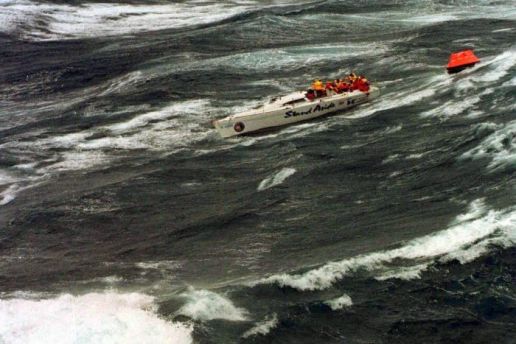
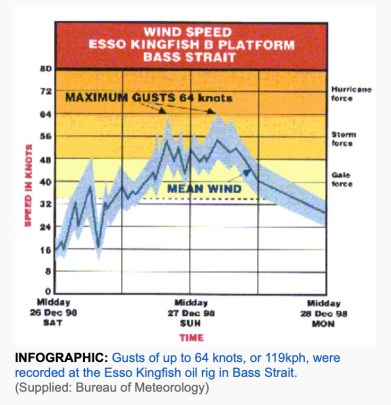
In 1998 a weather system popped up in the strait that no-one was sure about. The meteorologists spotted it but seemed to underrate its severity until well into the race. They also used terminology that many of the yacht skippers found confusing, didn’t understand or weren’t aware of until too late.
The book is called The Proving Ground and is written by G. Bruce Knecht. It focuses on four particular yachts. Two of the yachts belong to billionaires and are sleek maxi yachts. One is a more historical, hand made yacht made of Huon Pine from the 1940’s I believe it was that had been fitted out to meet modern standards. Another yacht was smaller than the maxi’s and more to what the boats used to be before the maxi’s entered the arena. There are various categories for the winners such as first to cross the line and those smaller yachts that work to a handicap depending on its make up.
The novel begins with introduction and information of the people on board. Some of their sailing history, how they came to be on the boats and importantly quite a bit of information about their personalities.
From start to finish there are variables the reader gets to know about some of the structural weaknesses and strengths of the boats, the interpersonal relationships of team members on a boat that often caused problems and the weather system.
Once the boats head into Bass Strait and the storm, chapters then arise about the people who fly the planes and helicopters in the rescues needed. Midway through the book there are a series of black and white photos with names of the yachts and people only. No spoilers are given in the photography captions of who survives and who doesn’t.
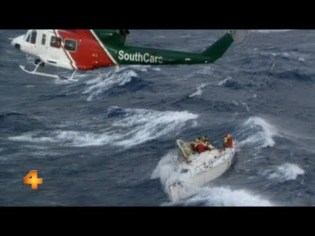
The final section is about the inquest held in Hobart and the testimony from the surviving sailors, meteorologists and rescue personnel.
“Of the 115 boats that started the race, just forty-three made it to Hobart. Six sailors died in this 54th Sydney to Hobart race. Seven boats were abandoned and five boats sank. More than twenty sailors were washed off their yachts, and fifty-five had to be pulled from the water by helicopters and rescue ships. It was easy to imagine how many of those rescues could have gone tragically wrong. (page 266)”
I began reading this book yesterday. I thought I would read a chapter or two then go off to do something else but it grabbed me. I finished it in two sittings. The book is 295 pages long. The weather descriptions grab the reader. The height of the waves they encountered is breath taking. Some of the waves are equivalent to four story buildings and higher. The boats roll 360 degrees over as sailors get tangled in ropes and cables and come out the other side after being trapped or submerged under their boats. The sounds of the wind masks out all conversation. Sone of the sailors continued to survive despite horrific injuries and incredible seasickness. There were also some ethical dilemmas that came up, misinformation and communication breakdowns that caused problems and were addressed during the inquest.
This is not a story one can really enjoy. You wouldn’t say, I enjoyed this book because it is not fiction and everyone does not live happily ever after. But it is riveting tale of what ocean racing sailors went through and what is involved in ocean racing at times. These are very brave people, many who live on the edge, some who have more money than brains, some who are following age old traditions of the sea. A compelling read.
The Proving Ground by G. Bruce Knecht- first published in Great Britain in 2001 by Fourth Estate- A division of Harper Collins. Copies available through abebooks.com (here).


 I said I would send the Russian travel book, Berezina by Sylvain Tesson to a random person who commented on the last post. I used Random.org and the winner is Kaggsy of
  This week has really flown by and I admit I have no idea where the time went. I have been reading and also attended a couple of films. Little Women was enjoyable but more for the costumes and scenery. They flash back and forth a few times which at times confused me momentarily but then all became clear. I have seen so many interpretations of this film I guess now I have it covered more than enough. The book remains the best way to know this story. Timeless.
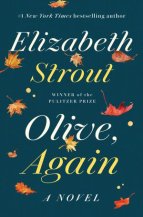 The book I immersed myself in this week was Olive Again by Elizabeth Strout. I really loved Olive Kitteredge as the first Olive book. I also enjoyed e mini-series made of it with Frances McDormand starring as Olive. As I read the book she is who I pictured in my mind.
 I know a lot of people probably wouldn’t like her as a person but I love her. She is acerbic and cranky with a very hidden heart of gold. As I grow older I find myself blurting out things when annoyed and I can hear Olive’s voice in my head-=. Sometimes it worries me how easily I could become her. She is one of my all time favourite characters in a book and I really do come close to knowing her as a non-fictional character. I guess this is very complimentary of Strout’s writing. If you enjoyed the first Olive book then I think you will enjoy the second one. If you didn’t like the first one then it is probably best to skip the second one. I think they are both books I could happily read again at a later date.
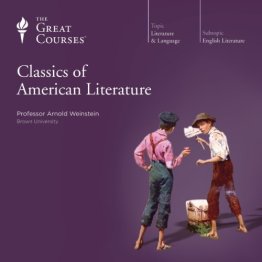 I downloaded the Classics of American Literature narrated by Arnold Weinstein on Audible.com. I listen to it for 30 to 45 minutes each night when I first go to bed each night. I set the sleep timer for 30 or 45 minutes and as it finishes I am either asleep or just about to sleep. The entire course is 44 hours long. I’m finding it very interesting. Mr. Weinstein is a professor in literature at Brown university and is very knowledgeable.


 Travellin' Penguin