
I was reading blog posts today and I have noticed there are a few challenges happening while people are stuck at home. Booker Talk who lives in Wales, is one of my favourite bloggers to follow and I noticed a challenge she is going to do during April about blogging. I am looking forward to reading her daily posts for the month.
I fail miserably at challenges but mostly because I have had too many other things on the go all the time. Well, that has all come to a screaming halt and I need something to keep me going. I have decided to make up my own challenge for April. “So”, I thought; What will it be?” My favourite thing about reading blogs is hearing about other books. It might be a long review of something I’m interested in or something like describing your latest second hand shop purchases or your library haul.
I have decided that I will share three books a day (if possible) during the month of April. I will do it in alphabetical order and the books must be on my shelf, either read or unread.
As today is the first of April I will begin with the letter A. (I will not use a, an or the). That will get me up to day 26. To make up for the other four days I will not do the alphabet challenge on Sunday. Instead I will continue with Simply Sunday that captures the week and past travel photos paired with books that have the same subject name as the photos. That will allow four more posts in that field and by then we might all be tired of them. I’ll have to plan something new for May if we are still quarantined.
On that note- Let us begin.
Aa
 1. An Accommodating Spouse (1999) by Australian author Elizabeth Jolley (4 July 1923 – 13 Feb 2007). While I have read a couple of her other books this is one that remains unread on my shelf.
Elizabeth Jolley was born in the industrial Midlands of England and moved to Western Australia in 1959. She is acclaimed as one of Australia’s leading writers and has received an Order of Australia, honorary doctorates from Curtain University and Macquarie and Queensland universities. She also won many other major literary awards in Australia. Tim Winton, Australian writer, has stated in one of his memoirs that she influenced him quite a bit as she taught him in university.
An Accommodating Spouse states in the blurb on the back:
When the Professor marries Hazel, Lady Carpenter warns that his new wife is so like her twin, Chloe, he will have trouble telling them apart. So inseparable are the twins that the Professor lives with both women under one roof.
Into their generous and harmonious household return their daughters-triplets-fresh from the round the world travelling, and ready for whatever excitement they can grab next in their lives.
Family life in the otherwise quiet house swells to a chaotic dazzling crescendo as the Professor struggles to keep in step with the seven women in his life and strange request from Dr. Florence.
 2. All The Books of My Life (1956) by Sheila Kaye- Smith (British 4 Feb 1887-14 Jan 1956). Kaye-Smith’s fiction was noted for being rooted in rural concerns: the nineteenth-century agricultural depression, farming, legacies, land rents, strikes, the changing position of women, and the effects of industrialisation on the countryside and provincial life.
I picked this book up second hand because it is a book about books which I love.
She states on the dust jacket overleaf- “In the course of a reasonably long life I must have read many hundreds of books, some of which I have forgotten, but most of which I remember, and all of which, remembered or forgotten, must have left some mental deposit, so that in a sense I am mentally as much the books I have read as I am chemically the food I have eaten. Their sequence is very much the sequence of my life. Certain of them have marked my way like milestones and others have lit it up like lamps. In writing about them I am taking the reader along the road which I have travelled through the years and telling what, though it cannot be called an autobiography, is nevertheless my own story.”
I do like the idea of thinking about how books shape one’s life over the course of many decades.
 3. Another unusual Australian book is entitled Angel of Death (2019) by author Leigh Straw. It is described as Dulcie Markham, Australia’s most beautiful bad woman. Leigh Straw is an academic, historian and writer. She is passionate about telling Australian stories. Some of her other books are The Worst Woman in Sydney; The Life and Crimes of Kate Leigh (2016); After the War: Returned Soldiers and the Mental and Physical Scars of WW I (2017); and Lillian Armfield: How Australia’s First Female Detective Took on Tilly Devine and the Razor Gangs and Changed the Face of the Force. Leigh is a Senior Lecturer in History at the University of Notre Dame Australia at the time of this printing.
The book is about Dulcie Markham who was a key figure of the underworld of Sydney, Melbourne and Brisbane during the most violent years of Australian crime- the 1920s to the 1950s. The descriptions states she had movie star looks but impeccably bad taste in men, she ‘saw more violence and death than any other woman in Australia’s history; according to one crime reporter. Dulcie’s killer smile matched her deadly reputation. I’d rate her twelve out of ten; said one detective of her beauty. But to fall in love with her (and many men did) was to risk death.
Until tomorrow 😍😍😍
 It’s a funny day. I wonder what all my blogger friends are doing and I imagine you’re all quarantined at your homes. Isn’t it odd to think of the whole world (almost) doing the same thing!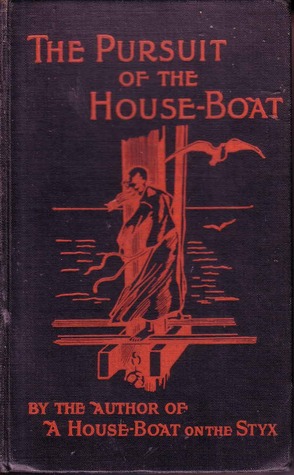

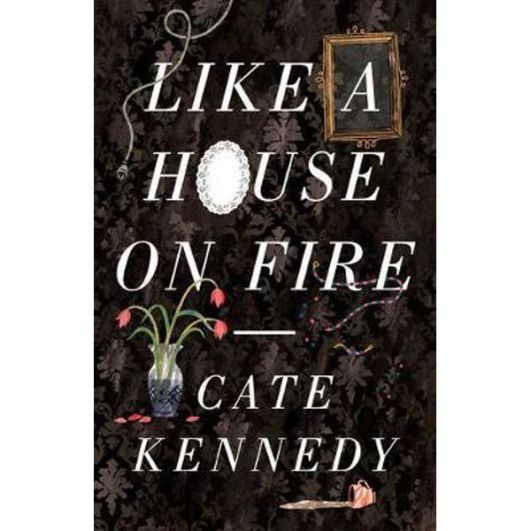 From prize-winning short-story writer Cate Kennedy comes a new collection to rival her highly acclaimed Dark Roots. In Like a House on Fire, Kennedy once again takes ordinary lives and dissects their ironies, injustices and pleasures with her humane eye and wry sense of humour. In ‘Laminex and Mirrors’, a young woman working as a cleaner in a hospital helps an elderly patient defy doctor’s orders. In ‘Cross-Country’, a jilted lover manages to misinterpret her ex’s new life. And in ‘Ashes’, a son accompanies his mother on a journey to scatter his father’s remains, while lifelong resentments simmer in the background. Cate Kennedy’s poignant short stories find the beauty and tragedy in illness and mortality, life and love.



 It is a most wonderful comfort to sit alone beneath a lamp, book spread before you, and commune with someone from the past whom you have never met…’
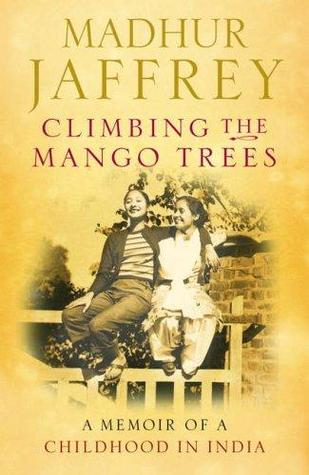 Today’s most highly regarded writer on Indian food gives us an enchanting memoir of her childhood in Delhi in an age and a society that has since disappeared.
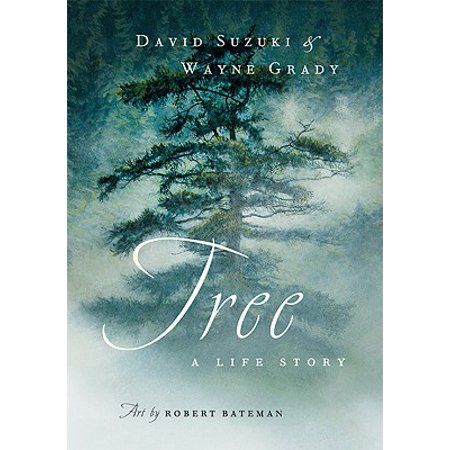 Only God can make a tree,” wrote Joyce Kilmer in one of the most celebrated of poems. In Tree: A Life Story, authors David Suzuki and Wayne Grady extend that celebration in a “biography” of this extraordinary—and extraordinarily important—organism. A story that spans a millennium and includes a cast of millions but focuses on a single tree, a Douglas fir, Tree describes in poetic detail the organism’s modest origins that begin with a dramatic burst of millions of microscopic grains of pollen.

 Travellin' Penguin