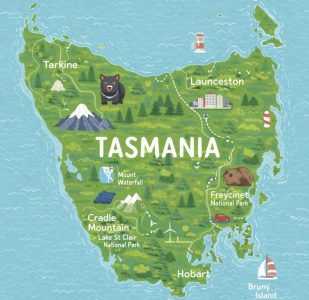
I live a retired life in Tasmania, Australia. I love books, travel, animals, photography, motor biking and good friends. I indulge in all these activities with the little Travellin' Penguin who has now shared five continents with me. We love book shops, photography walks and time with friends as all our family is in USA and Canada. I enjoy visitors to my blog so hope you'll stop by.
I am just about finished with this wonderful biography of a very talented and educated Sonia Sotomayer, My Beloved World. I read about this book on the blog of Lakeside Musing and I thank her for the recommendation. It is a really interesting story. Ms. Sotomayer was a Puerto Rican born to an immigrant family in 1954 in the Bronx, New York City. The book discusses her family, her relatives, her Catholic Education, her thoughts, her feelings, her triumphs and her hardships.
She was able to benefit from the Affirmative Action programs happening in America during the 1970’s and from high school went on to graduate from Princeton University and then onto Yale Law School with high donors. Her academic pedigree is long and thorough.
I have been listening to the unabridged audible version of this book with the narrator Rita Moreno who has been excellent.
I love the way she writes, her descriptions of the Bronx, first in the city area, later moving into the projects and what life was like there.
Her family ties are both intense, funny and sad. Her relationship with her father who spoke no English, had a third grade education, worked as a Tool and Die maker, dying in his 40’s from too much alcohol was mixed.
Her mother was also a very complex character and later her support of Sonia in her education was remarkable.
I am not quite finished with this book but will be in the next day or two. If you are interested in anything to do with legality, the justice system (though the story stops before she has a chance to get into her work as a supreme court justice) and a person’s never-ending determination to succeed this book will make you feel really good.
I really like it. The Penguin liked it too and has been walking around the house all week dressed as a justice. (roll eyes)
Just as I decide to begin reading more of my Penguin books from my collection, our book club decides to discuss Jerome K. Jerome’s book Three Men in a Boat. I began reading this book (ignoring the tiny print in the old Penguin book) when I saw our local library had the E-Audio version of it so I downloaded it. I have been listening to it the past couple of days off and on.
According to what I have read online, Jerome was born Jerome Clapp in 1859. He wanted to become a man of letters or a politician but his father died when Jerome was 13 and then his mother when he was 15. He had to begin work after that.
He did a variety of jobs and eventually ended up as a writer of essays, freelance pieces, etc. He wrote his most well known book, Three Men in a Boat (and a dog)at age 30 in 1889.
It is the story (quite autobiographical after the people in his life) of friends George and Harris and himself sitting around talking about all of their illnesses one evening. Nothing like three hypochondriacs spending an evening together. It is a very funny page or two.
They decide in the end they are all just tired from overwork and decide they need a holiday. The story begins when they decide to rent a small boat and explore the Thames. The three of them and Jerome’s dog, Montmorency undertake the journey together.
The book was originally meant to become a bit of a travel guide with historic points along the Thames discussed. However the comic quality soon took over and this weighted heavier than the history.
Harris, George and Jerome (called only J. in the book) begin planning, packing and eventually the trip.
I enjoyed getting stuck into this story. It has some very funny passages. The story is quite visual and one is able to picture the pure incompetence and hilarity between the three friends. The characters are written to caricature I thought, that deal with some very common events (oversleeping, packing a full suitcase only to unpack to find a toothbrush needed later, deciding on what food to take and the interactions once underway).
I can see why it would have become quite popular in its time. Much of it has not dated much but I have to say (against some of the research online I read about this book) that some of it has dated. I found the description of women in this book to be quite tedious. They were all very dense, tiresome, insipid and goofy. I must admit I did become weary of their descriptions and the roles they played. I appreciated the tongue in cheek of some descriptions but overall it did not always ring true.
I thought the humour was very good. There are many parts where I laughed out loud, perhaps as I would laugh at British sitcoms. (Remember when Hyacinth Bucket dressed as a sailor for her boating day on the river and ended up in the drink?) Humour such as this wears thin after awhile. I like comic novels but often I find an author just plain over does it. The joke goes on and on and on. The first joke makes for a good belly laugh but once that is over I am ready to move on and not read another 3 or 4 pages as the author tries to get you to have a raucous laugh yet again and again at the same story. Sophie Kinsella’s books come to mind where every single line becomes a joke and one loses patience with the story which is quite interesting.
There may be people who disagree with that description but this is my post and my read so I am sticking to what I have said.
Overall I enjoyed this book very much. It made me feel like I was in England in the 1880s to 1890s. I can see a great many people sitting in their parlours laughing out loud, hanky in hand, wiping eyes behind their glasses. I did so myself which is good considering this book was written 127 yrs ago. This book is incredibly, still in print so there are many things that are truly just right.
I think it will be interesting when our book club discusses this (I think in January?)
I am getting caught up on my book reads for club so I can read what I want over the silly season. Jerome K. Jerome wrote a sequel to this book about the same friends undertaking a bicycle trip but evidently this was not as popular with society as the first one. I think it must go back to the jokes. After all how many times can one watch Hyacinth Bucket and keep up the same laughs. The humour does begin to wear off.
In summary though the Penguin and I did enjoy this little trip down the Thames but we did find the small boat with three men, a dog and all of their baggage (you won’t believe all that they packed) a bit tight.
This evening I was looking through the 1001 Children’s Books….and the first book recommended at the beginning is The Little Engine Who Could.
I have come across this story several times over the years and I knew it was short so I decided to look it up on You Tube and find a copy. I found a short video of a woman reading the book online. I spent a few minutes and watched it as she read the story. It is the story of an old train, not very big, trying to get over a mountain. It doesn’t work very well and needs to find a way to get the train up the steep hill. The train is full of toys and lollies for the children on the other side of the mountain. I spent some time trying to find an original cover of the story rather than the boring train pictures on the more modern covers.
You know how it is when you look up one thing on Google and then that leads somewhere else and then there are about 10 different tangents to follow after that? I think it is the love of researching things more than really wanting to know the complete history behind this story. But I must say, reading various pages online I found all sorts of information regarding the development of this simple tale.
1960
What I notice most in children’s stories of old is the more complex vocabulary. Books for children in the “olden days” had more words, sentences were in smaller font and there weren’t as many illustrations. Nowadays when you open a children’s books the illustrations are huge, the text isn’t much smaller and there are fewer sentences on a page.
I don’t say this lightly as I watched the changing curriculums of primary schools and early education during my 35 years working in schools. I remain more traditional in my phonics approach to reading, teaching root words which aren’t taught anymore, transcribing verbs, talking about syllables and accents. These things aren’t around much anymore. No memorising long passage of literature such as plays and poetry in late primary school.
The LP version
Mind you the knuckles of children also are not hit anymore with wooden rulers and teachers don’t threaten children with hickory sticks or writing 100 sentences, “I will not talk in class” anymore. (I got so I could write that sentence three times at a time by carefully arranging three pencils in my hand and yes, it did work.) I digress.
Anyway, I spent an hour searching out everything I could find about this wonderful tale with the simple morale: If you work hard, persist and tell yourself you can do it, then you can do it, no matter how hard it is. That was a persistent theme of growing up in 1960’s America where any boy or girl, if they worked hard enough could become president of the United States. Teachers and parents told us this all of the time. I never believed that until this week. I guess it is true.
According to Wikipedia…
The story’s signature phrases such as “I think I can” first occurred in print in a 1902 article in a Swedish journal. (“In Search of Watty Piper: The History of the ‘Little Engine’ Story”. New Review of Children’s Literature and Librarianship.)
An early published version of the story, Story of the Engine That Thought It Couldappeared in the New York Tribune on April 8, 1906, as part of a sermon by the Rev. Charles S. Wing.
It was first sold by door to door salesmen in a compilation of stories in the book My Big Bookhouse in 1920
The best known incarnation of the story The Little Engine That Couldwas written by “Watty Piper”, a pen name of Arnold Munk, who was the owner of the publishing firm Platt & Munk. Arnold Munk was born in Hungary, and as a child, moved with his family to the United States, settling in Chicago.
Later he moved to New York. Platt & Munk’s offices were at 200 Fifth Avenue until 1957 when Arnold Munk died. Arnold Munk used the name Watty Piper as both an author of children’s books and as the editor of many of the books that Platt & Munk published. He personally hired Lois Lensky to illustrate the book. This retelling of the tale The Pony Engine appeared in 1930, with a title page that stated: “Retold by Watty Piper from The Pony Engine by Mabel C. Bragg’s copyrighted by George H. Doran and Co.
In 1954 it the book was upgraded with revised vocabulary and colourful pictures.
Now you know more than you ever wanted about this charming little story. I think I might be using this phrase more and more over the coming year. ‘I think I can, I think I can, I think I can…’

 I am just about finished with this wonderful biography of a very talented and educated Sonia Sotomayer, My Beloved World. I read about this book on the blog of Lakeside Musing and I thank her for the recommendation. It is a really interesting story. Ms. Sotomayer was a Puerto Rican born to an immigrant family in 1954 in the Bronx, New York City. The book discusses her family, her relatives, her Catholic Education, her thoughts, her feelings, her triumphs and her hardships.
 Just as I decide to begin reading more of my Penguin books from my collection, our book club decides to discuss Jerome K. Jerome’s book Three Men in a Boat. I began reading this book (ignoring the tiny print in the old Penguin book) when I saw our local library had the E-Audio version of it so I downloaded it. I have been listening to it the past couple of days off and on.


 Travellin' Penguin