
Posted in Fiction

BITS AND BOBS…

I’m going to be changing the format of this blog a little bit. I have been trying to get too much information into each post. I have books, photos, daytime excursions and on and on. I have decided I am going to do shorter posts but maybe more often. As a reader I’m a tortoise, not a hare. The same goes for writing posts. So I’m going to adjust myself to that realisation. 😃. One day there may be a photography focus. The next will be about a book I read.  I want to mention entries in journals. I want to share some interesting books from my shelf. I want almost a diary format. 

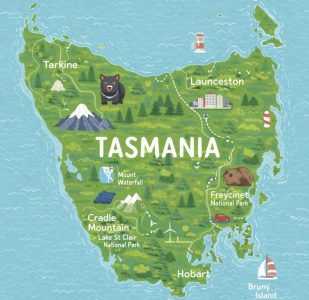
I want to write about the walks I do with a camera around Hobart or southern Tasmania. I want to make the information for others to comment back and not overwhelm them.

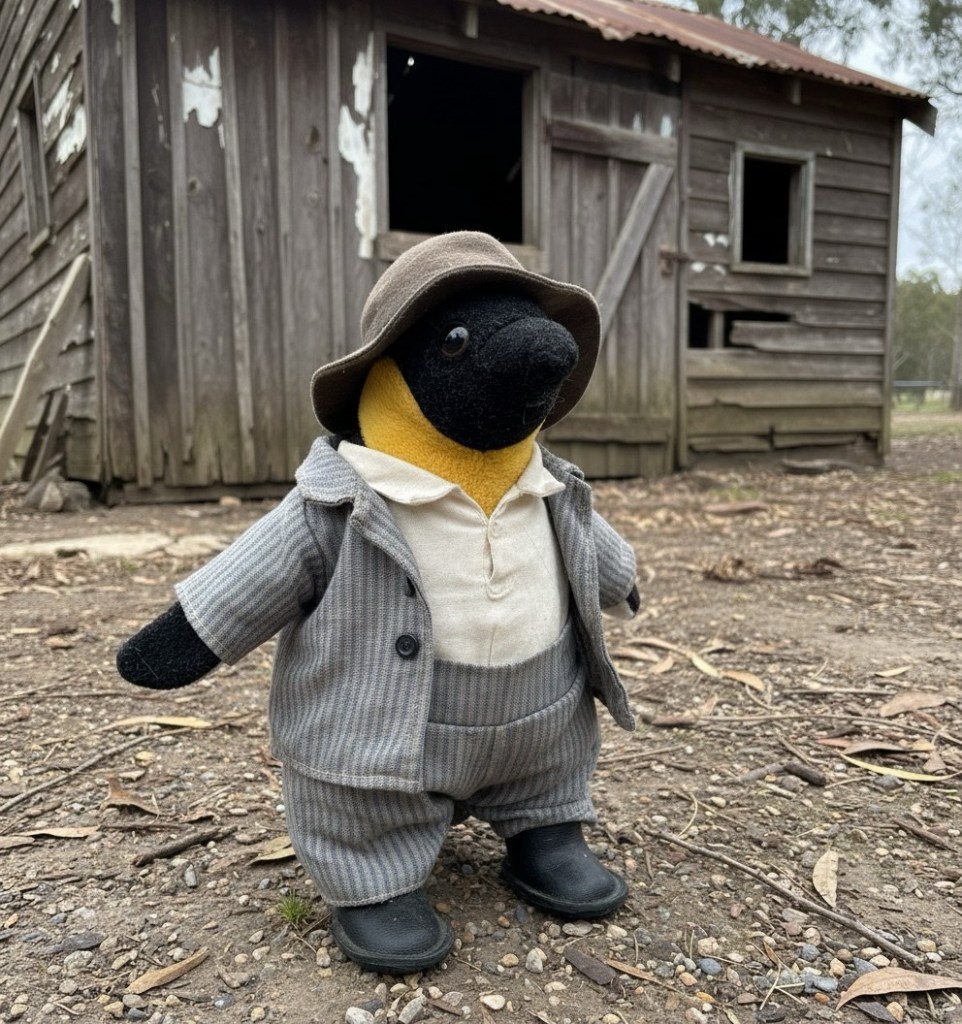
I have two things today. One book. One excursion and just a couple of photos. If you love hearing about books but not interested in photography you can just skip the photo ones. If you enjoy the photos but not so much the book talk then that can be for you. If you just want to hear about life rambles then you’ve got it!! The Penguin will continue to be a part of the blog and I thought I’ll take him with me more often and get photos of him out and about. I’ll continue to dress him in themes that match the posts.

 Life is busy and I know some of you don’t have a lot of time to read long posts that cover too much info. So I’ll keep them shorter. I hope it works. I enjoy hearing from my readers so much. So now I’ll move on with the topics of today. Stay tuned for the change. Maybe I should turn Penguin in for a tortoise- (joke-I’m too attached).

*****************************************************

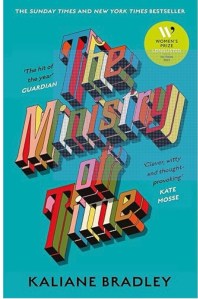
I finished the book group’s book The Ministry of Time by Kaliane Bradley for Thursday’s book group meeting coming up.
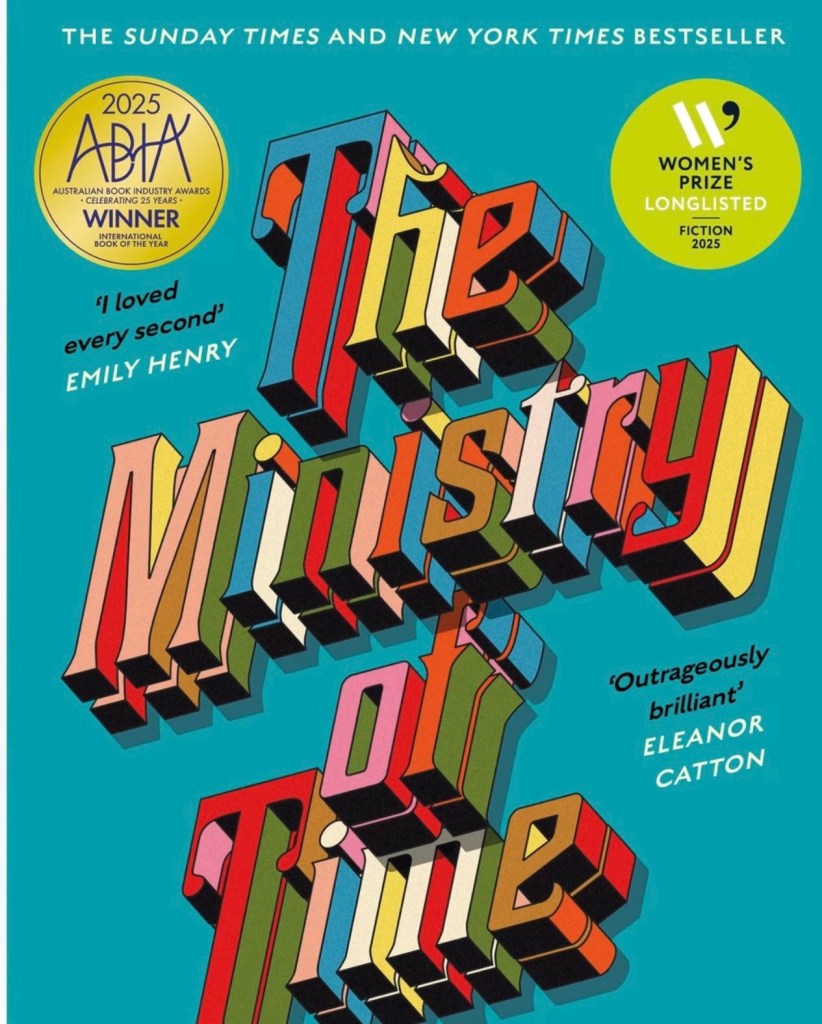
Good Reads gives it 3.5 stars. I did not enjoy it at all. 

The Ministry of Time is a clever mix of time travel, romance, and intrigue. AI explains: 

In a near-future Britain, a secret government agency discovers time travel and brings people from the past into the present to study them. A young civil servant becomes a “bridge,” assigned to live with and guide a 19th-century Arctic explorer, helping him adjust to modern life.

As they navigate everything from technology to social norms, their relationship deepens into something romantic—but the project itself hides darker motives, and things begin to unravel into danger and conspiracy.

At its heart, the book explores big ideas:

  • what it means to belong in a different time
  • identity and cultural displacement
  • and whether love can survive across history

It’s both entertaining and thoughtful—part love story, part spy thriller, and part reflection on history colliding with the present.

************

I thought the premise was interesting. But I didn’t like the structure of the book and how of the four people brought back from centuries past, only one seemed to be very developed and then that just melted into a big romance with his “bridge”. Next thing you know there are then people from the future trying to wipe everyone out. I just thought the whole book was ridiculous. HOWEVER…..I know there are people who really enjoyed this book. I just am not one of them. It is imaginative, I’ll give it that. I do look forward to the discussion Thursday of our book club members and I’ll let you know how that goes.

Yesterday I had an interesting day. The Tasmanian Museum organised a trip with Ian Terry who produced a wonderful historical photographic journey of a Tasmanian historical figure, George Augustus Robinson. The trip was based on the photographic book he produced of the places Robinson visited along with excerpts from the man’s diary. A great deal of research went into this project and it is wonderful.

George Augustus Robinson was a British-born colonial official best known for his role in early 19th-century Tasmania during the violent conflict between European settlers and Aboriginal Tasmanians, often referred to as the Black War. He led what he called a “friendly mission” to persuade Aboriginal people to relocate, promising safety and support, and ultimately facilitated their removal to Flinders Island. (Flinders Island is a small island off the northern coast of mainland Tas in Bass Strait). While Robinson saw himself as a protector, his actions contributed to the displacement, suffering, and dramatic population decline of Aboriginal communities. He later became Chief Protector of Aborigines in the Port Phillip District (now Victoria), continuing similar policies.

We had a bus load of about 45 people who signed up for this excursion. We left Hobart at 8:30 am and returned a little after 5pm.  I sat next to a lovely woman who I’d not met before and we had really fun conversations. All of the people on the trip seemed to be lovely and I also saw two others who I had met in the past and chatted to.

We explored the forests of the central highlands of Tasmania. We enjoyed  a couple of longer walks in the forests and the information of where Robinson had had meetings with Aboriginal people back in the 1800s was explained to us. It was a great way to learn history of this terrible time in Tasmanian history. The forests were beautiful and I did take some photos of which I will share more of.
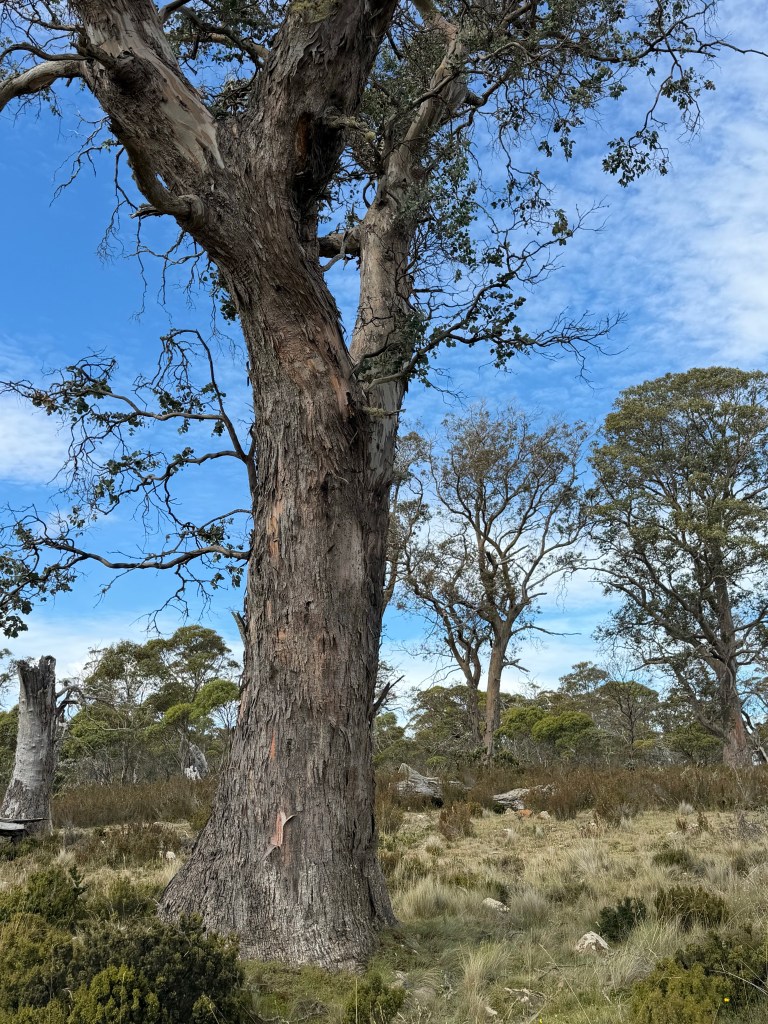
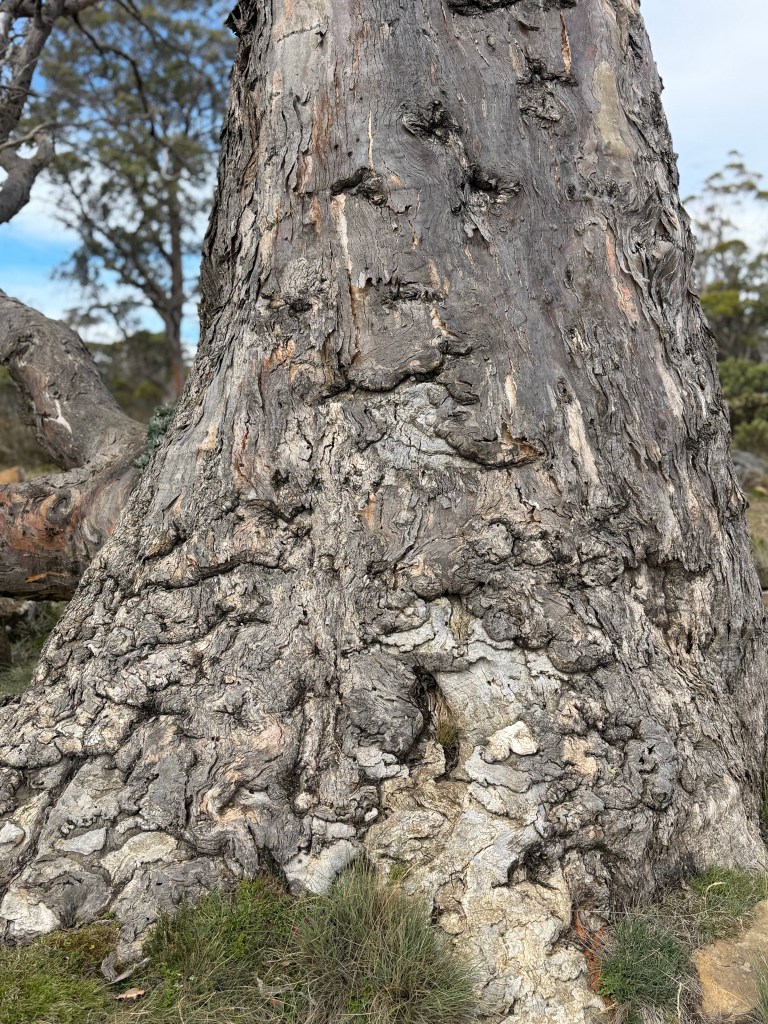
A very old Cider Gum tree. They are disappearing from our state due to global warming. It isn’t as cold here in winter for their seeds to propagate.
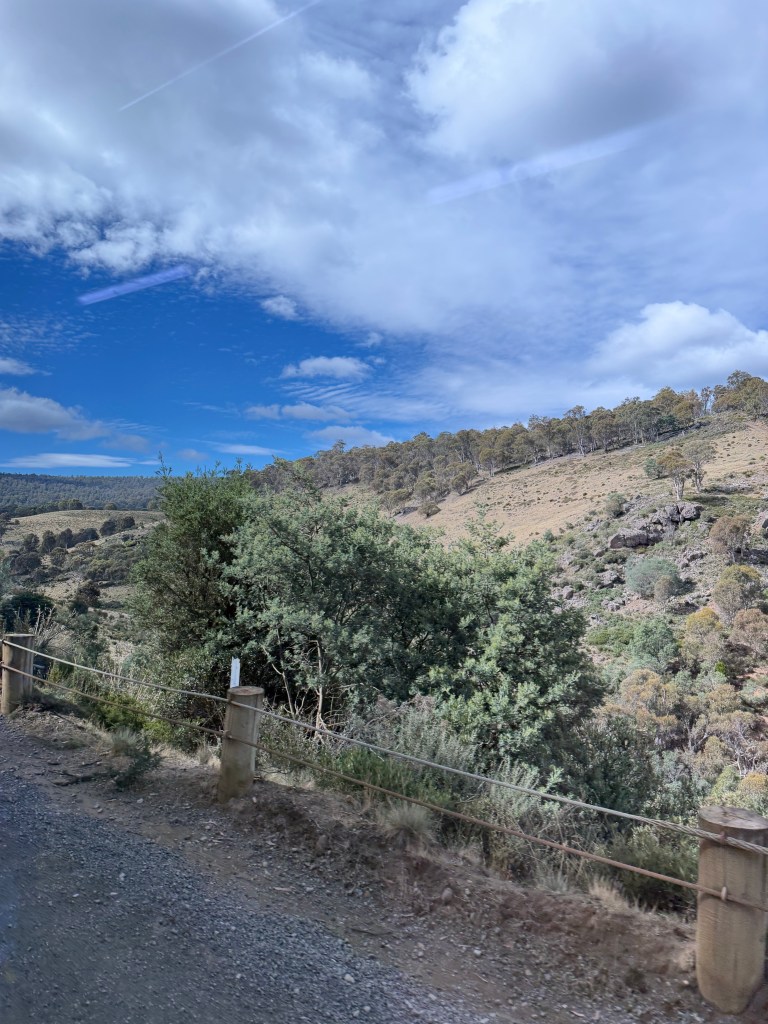
I’ll leave you with this for today. I’ll be back to share a bery different type of book with you very soon.

Have a good week.


Is there a favourite forest you visit where you live?

Posted in Fiction

Heading into Autumn

A Very Busy Couple of weeks

I try to post every weekend but the days have their own way of disappearing. So let’s just keep going forward and don’t worry about those missed days.

BOOK I ENJOYED

I read Muriel Spark’s novella The Driver’s Seat. What a very strange story. I will go as far as to say it was weird but it kept me turning pages. She packs a punch in this book and I think the reader has no idea where the story is going. All we know from the start is the woman named Lise as the main protagonist is going to be murdered.

Overview

The story follows Lise, a strange and erratic woman who leaves her job and travels to a southern European city (often read as Italy). From the beginning, her behaviour feels off: she’s confrontational, overly specific about trivial details (like clothing), and seems to be following a rigid internal script.

What makes the novel distinctive is that Muriel Spark reveals a crucial outcome ahead of time: Lise is going to be murdered. The narrative then becomes a kind of inverted detective story where the “victim” appears to be orchestrating the circumstances of her own death. (AI explanation)

Lise has worked in a boring job for a number of years. She suddenly takes off on a ‘holiday’ to an unnamed country in Europe, the reader thinks, for a holiday. On the plane she sees a man who she “thinks is her type”. She is so weird he gets up from his seat and moves. She finds her hotel upon landing and had agreed to meet up with the man seated beside her on the plane (who is really creepy) for a drink at his hotel later. 

In the meantime she meets an elderly woman outside her hotel and they decide to spend the afternoon together, having lunch, shopping etc. 

She keeps running into various men during the day and she continually tells the older woman, “He’s not my type”. The reader thinks she is looking for romance but as we are also told she is going to be dead there is quite a twist of events.

Spark’s writing is:

  • Sparse and precise — very little emotional explanation
  • Disorienting — jumps in time and perspective
  • Darkly ironic — often undercuts expectations

The tone can feel almost clinical, which makes the disturbing content even more intense.

I really enjoyed this book as it kept me on my toes. I just kept asking what is going to happen? Why does the elderly woman keep talking about her nephew who is flying in to meet her? Why does she think he will be a good match for Lise? Why is Lise controlling every situation? What is she looking for? Why does she reject everyone she meets? 

As we know from the start she is going to die? Why? 

I really got into this little story. I have read Spark in the past but it has been awhile and I’d like to read more. This book has been unread on my shelf for awhile and now I can pass it on to an op shop or a small library and it can creep someone else out.

PHOTOGRAPHY

I mentioned in my last post I’d be doing some photography at some wetlands but unfortunately it was located in an odd spot I’d not visited before and parking wasn’t available where I thought it should be. One of those mornings that just don’t work out. However I did get to go to the dog beach with my two dogs and I got a few photos there.

I also had a morning in the city doing street photography. I had watched a video about a street photographer in Lebanon in the past and he did a lot of photography with bright colours. I took the bus into town and spent time looking for brightly coloured walls and some light, though it was a flat cloudy day.

BOOKISH EVENTS COMING UP

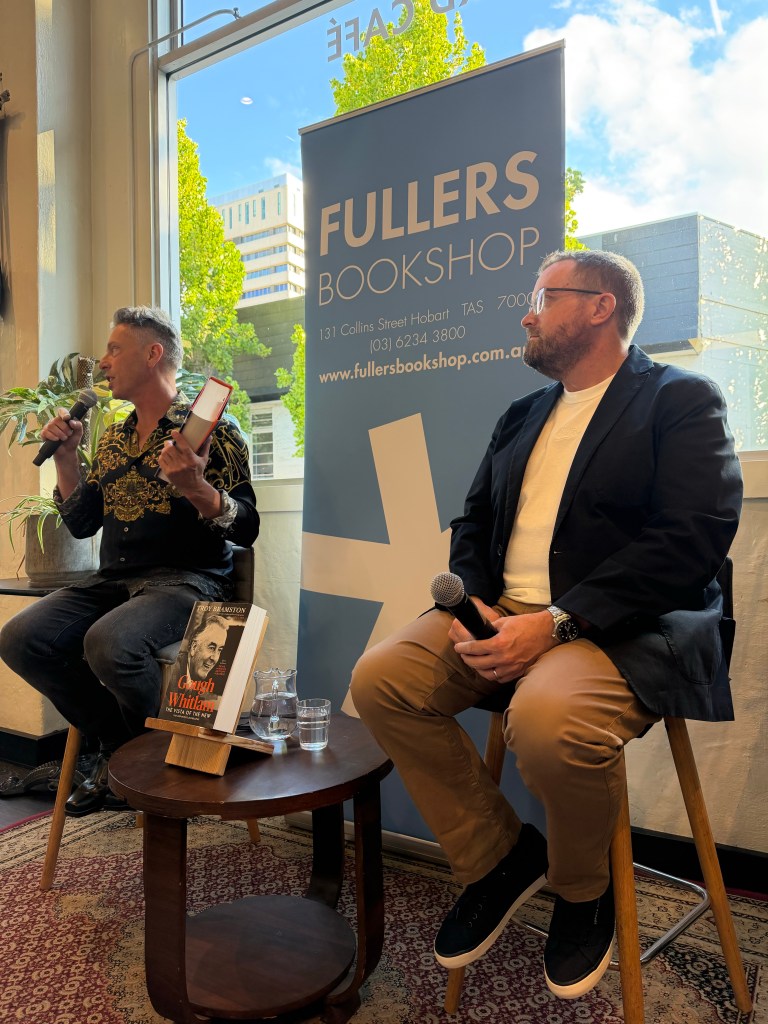
***Tonight three of us went to a book launch about Gough Whitlam, a former Prime Minister of Australia. Here is the quick blurb.

Gough Whitlam | In Conversation with Troy Bramston

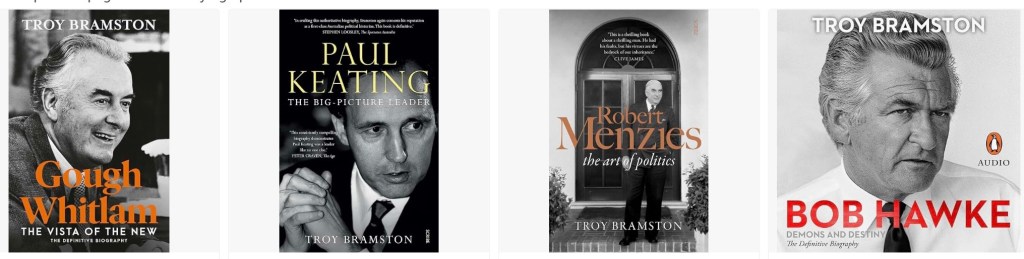
Troy is also known as his in depth biography of previous Prime Ministers Paul Keating, Bob Hawke and Robert Menzies.

The Blurb: Whitlam’s bio is a commanding biography of one of Australia’s greatest and most visionary prime minsters by an acclaimed political journalist and author. There has been no one like Gough Whitlam in public life – a charismatic, inspirational and visionary leader who ushered in a reform revolution to modernise Australia, which endures to this day. But Whitlam’s immense self-belief, relentless determination, misjudgements and blunders were truly Shakespearean and help to explain his downfall. 

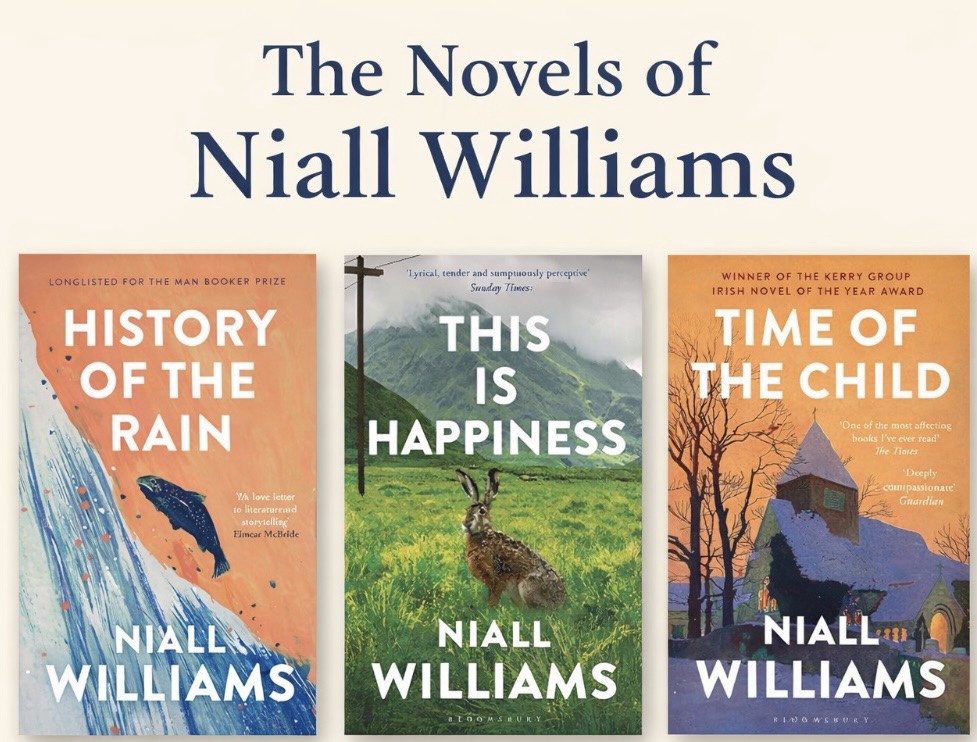
***Last night I bought a ticket for Irish writer Niall Williams who is coming to Tasmania the end of April. I love his writing and look forward to hearing what he has to say. It will be packed event for sure.

Thursday 30 April 2026

Beloved Irish writer, Niall Williams, reflects on his writing life and career and the country home that inspired his acclaimed novels. Niall Williams was born in Dublin in 1958. His critically acclaimed and bestselling fiction has been shortlisted for the Irish Times Literature Prize and longlisted for the Man Booker Prize and the IMPAC Award. Williams’ debut novel Four Letters of Love, an international bestseller, has been adapted by the author for screen and will star Helena Bonham-Carter, Pierce Brosnan and Gabriel Byrne. His most recent novel Time of the Child was an instant Irish Times bestseller and was awarded the Kerry Group Novel of the Year Award. He lives in Kiltumper in County Clare, with his wife, Christine. Join Niall for an unforgettable night.

***I’m heading into the middle of our April book group with the Ministry of Time by Kaliane Bradley. More on this book later. 

That wraps up another couple of weeks. Hopefully I’ll be back in another week all decompressed from life’s events lately.

Question of the week- As Ministry of Time features time travelling/sci-fi I’m trying to get my head around it though it is interesting. It is a genre I never choose for myself so here’s your question:  

What genre do you want to read more of but rarely pick up?


Posted in Fiction

Taking Book Notes With My Commonplace Journal…

What a beautiful summer’s day we’re having but I must say I’d love a good rain storm. It is so dry here in Tasmania. 

BOOK OF THE WEEK

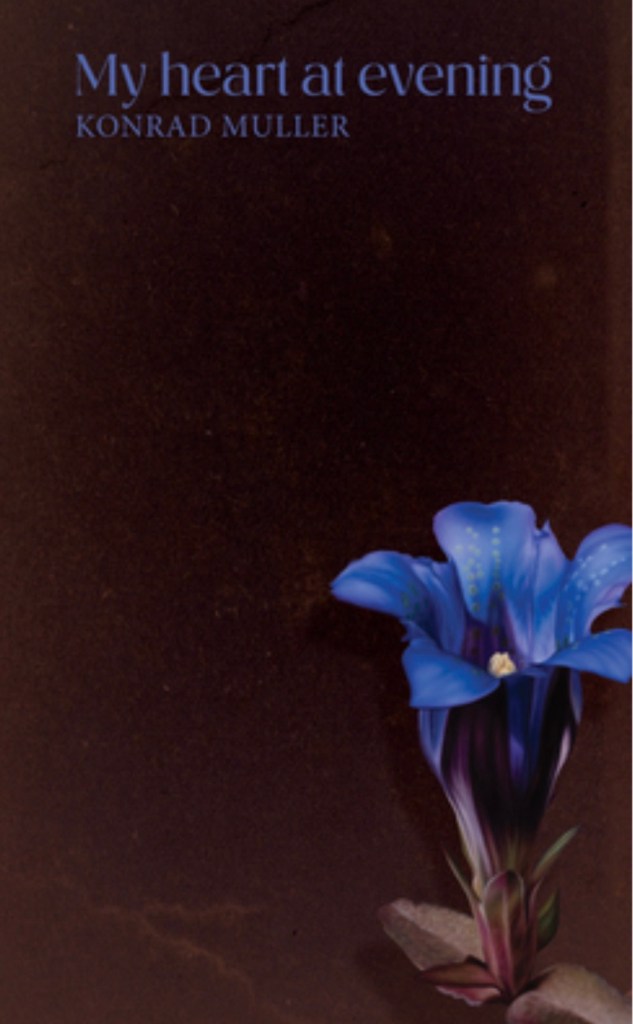
I just finished a really good Tasmanian book. I really liked it. I mentioned it before. It is called My Heart at Evening by Konrad Muller. The author grew up in Melbourne, studied Arabic in Egypt and was an Australian diplomat posted in Cairo and Tel Aviv. He now works on a small family vineyard in northern Tasmania. This book is his first novel. 

The story:  In 1832, Van Diemen’s (original name of Tasmania) land. A troubled emissary narrates his journey north from Hobart Town to Circular head (in the northwest of state) to investigate the circumstances surrounding the suicide of Henry Hellyer- surveyor,  amateur botanist, artist and friend to the wife of the Chief Agent in the north. There he navigates the horror of a fledgling nation.It is an irresistible foundational story and observation of the forces that shaped Tasmania, and Australia more broadly from power, to mateship, sexuality a nd isolation-forces we still recognise today (book blurb). 

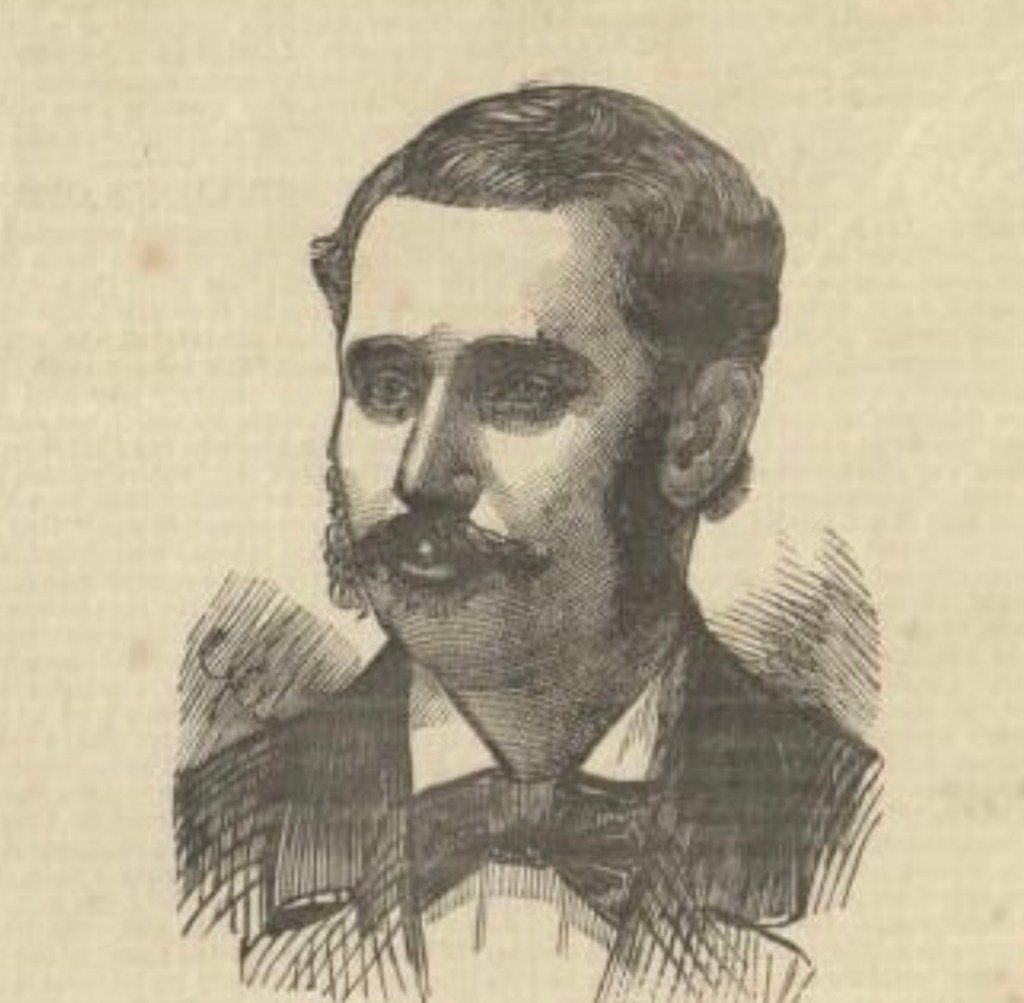
From Chat GPT-  Henry Hellyer was an English surveyor and explorer who played a crucial role in opening up the remote north-west of Tasmania (then known as Van Diemen’s Land) in the 1820s.

Henry Hellyer – photo public domain

Why he matters in Tasmanian history

1. Surveyor for the Van Diemen’s Land Company
In 1825, the powerful Van Diemen’s Land Company was granted vast tracts of land in north-west Tasmania. Hellyer was appointed chief surveyor. His task was to:

  • Explore and map rugged, heavily forested country
  • Lay out farms and townships
  • Plan access routes and infrastructure

2. Founding of key settlements
3. Overland exploration
He cut tracks through extremely dense bush between the north coast and the inland plateau — an extraordinary feat at the time. His journals describe:

  • Thick rainforest
  • Difficult river crossings
  • Encounters with local Aboriginal Tasmanians
  • Harsh weather and isolation

His work was physically punishing and psychologically demanding.

***********************************************************************

Henry died of suicide and Governor Arthur at the time wanted to know the circumstances around his death. The book is about the narrator going to the northwest of the state and trying to get the story. The writing is beautiful. I loved this man’s writing. The history is anything but dry. It is an easy read for learning so much about this time period and this man.

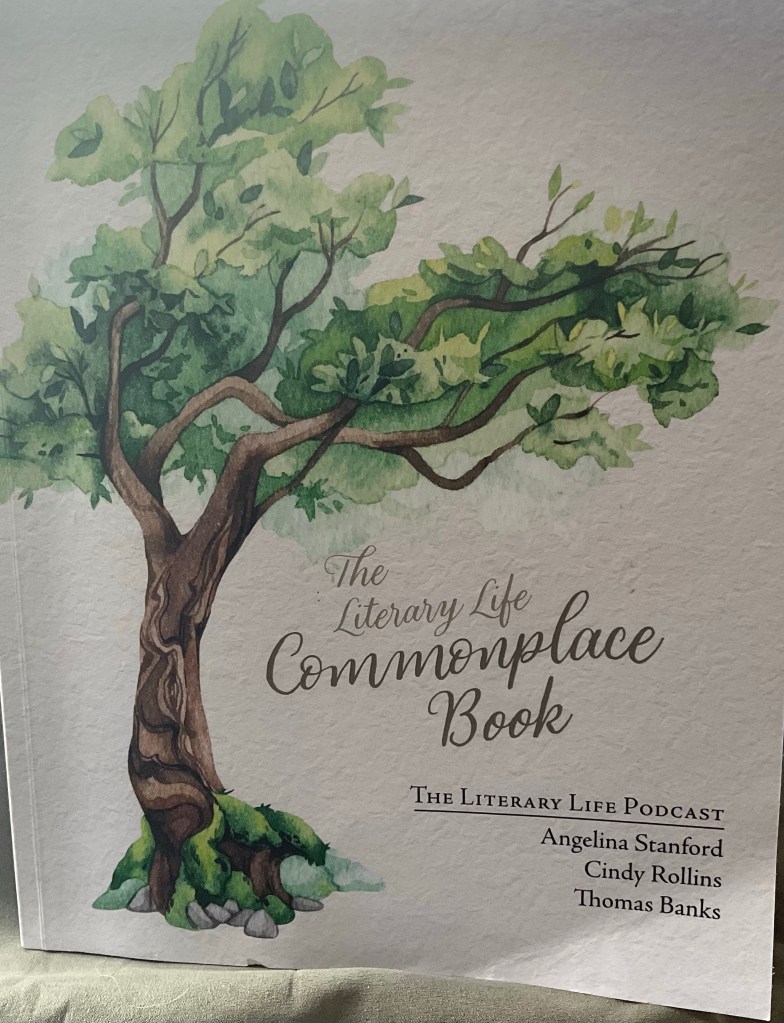
MY COMMONPLACE JOURNAL

I came across this type of journal recently and I am really enjoying writing one. I enjoy seeing how others use it.

commonplace journal is a personal notebook where you collect and organise useful or meaningful information—such as quotes, ideas, observations, and excerpts from things you read. Instead of recording daily events like a diary, it serves as a curated reference of knowledge and inspiration you want to remember and revisit

While reading the Henry Heller book I took notes of places in Tasmania I wasn’t sure of location. I had some 1800s clothing vocabulary I didn’t know. There was a quote a man uttered under his breath about another I didn’t know what it meant. I jotted these words/quote down. At the end of my reading session I looked them all up and wrote it in my commonplace journal. I had a lot of fun doing so as I love research and the rabbit holes that follow.

I’ll share a couple of examples. 

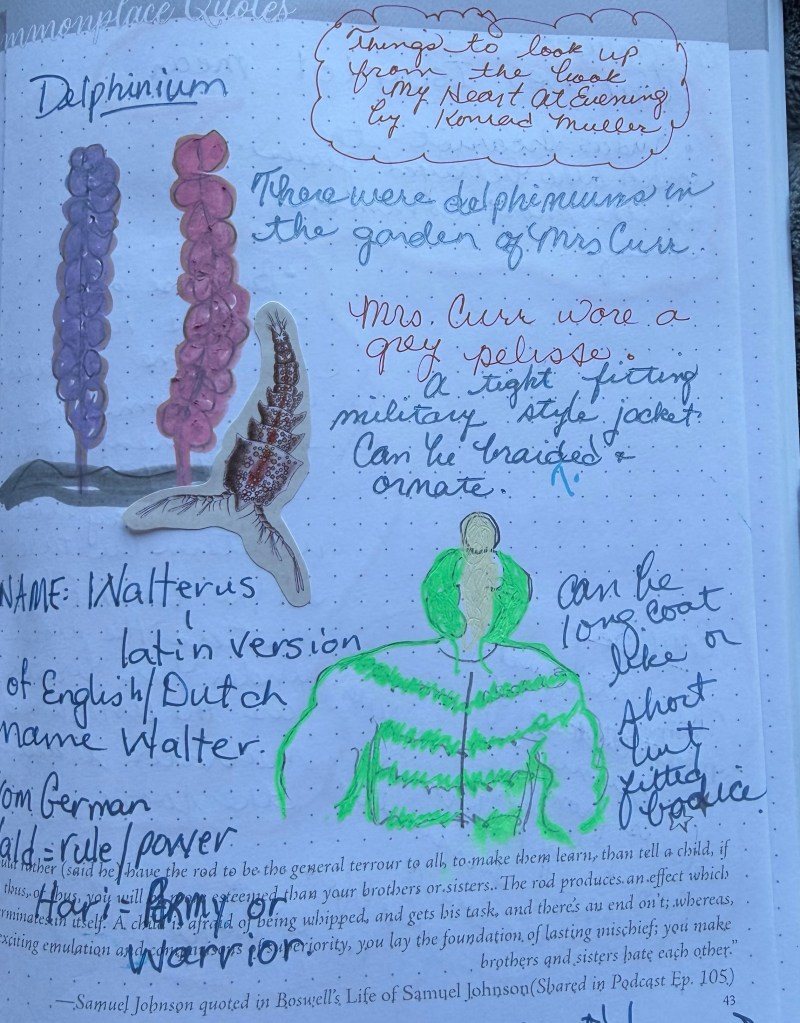
  • While walking in a garden the flowers Delphiniums were mentioned. I couldn’t remember what they were. When I looked them up and saw the photo it was a forehead slapping moment. Of course I know what those are.
  • Describing a woman’s. clothing the word “pelisse” was something she wore. What the devil is a pelisse? Turns out it is a long or short dress/garment with a tightly fitted bodice, often with embroidery decoration.


  • The names of two children were Walterus and Carolus. Why not just Carol and Walter. I wanted to know the origin. Turns out it is of a Latin origin. It was then shortened. It is of English/Dutch origin.
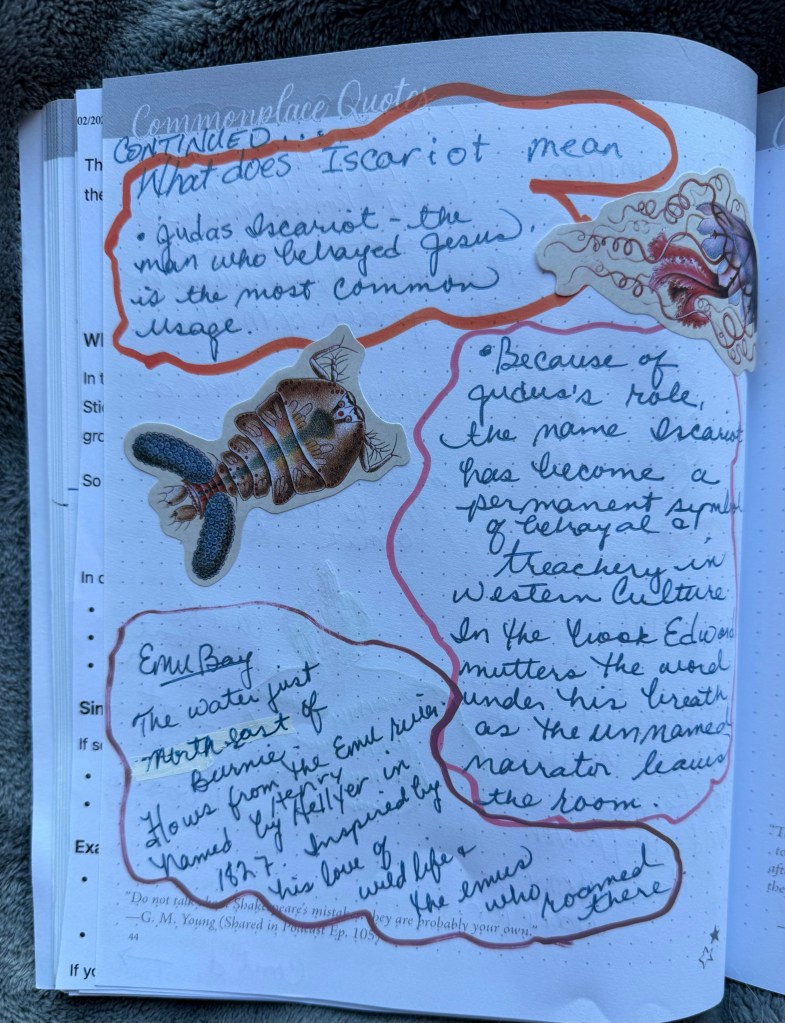
  • One man in authority, talking to another man who is a freed convict (not as good as him, of course) mutters under his breath at the end of the conversation “Iscariot!” Why call a man an Iscariot?  Turns out it is a reference to Judas Iscariot, the man who betrayed Jesus. Iscariot has become a permanent reference to a man who betrays another.
  • I wondered why Emu Bay was called that. Are there emus in Tasmania? Not now but supposedly at one time there were. I need to look into that one a bit more.

I had a lot of fun looking these terms up and I wrote them in my Commonplace journal and then I illustrated them with my five year old’s drawing skills.

I now have this terminology committed to memory. Ha!

With an older brain it is lovely to know there are tricks to keeping one’s memory of something one reads!

PHOTOGRAPHY:

I haven’t done any photography this week but our photo group is going to a wetlands area on Friday morning. I understand there could be a platypus there as well as birds and who knows what else. So stay tuned for a couple of photos from this wetlands  I never knew this wetlands is where it is, a 25 minute drive away tucked behind a hotel.

So all the best for the rest of the week and I’ll catch up again.

QUESTION OF THE WEEK: Are you going anywhere this week you’ve never been before?  I find it’s always a fun thing to do. Maybe shop, maybe enjoy a. New nature walk, maybe a new place to have a coffee or a meal. If not why not do so.