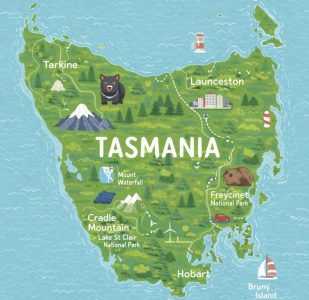
On Friday I decided to progress my Alphabet Photo challenge. I have upgraded my camera gear and have now gone to Canon mirrorless which I am loving. It doesn’t weigh as much for one thing and many more features. For the challenge I am up to the letter D. Looked on the map and saw Chauncy Vale is part of the Delta Den Conservation area. I will put a little blurb below that describes it.
The Chauncy Family
Chauncy Vale Wildlife Sanctuary is one of the oldest private reserves in the State. It’s the former home of Nan Chauncy, a multiple award winning Tasmanian writer. Her books were translated into several different languages and adored by many around the world. Nan’s writing captured a vivid picture of the Tasmanian landscape, it’s people and wildlife. She wrote to share her love of Tasmania- Her island shaped like a heart. She also portrayed issues surrounding early colonial life, isolation, identity, migration, enduring hardship, domestic violence and the aboriginals of Tasmania.
The whole sanctuary is a valuable heritage and natural environment study site. Chauncy Vale, including Day Dawn and the associated outbuildings, are registered on the Tasmanian Heritage Register and in the Southern Midlands Planning Scheme 2018 – site of historic significance’. It has a long and well-recorded history of European use, with some sites on the property particularly recognised for their cultural heritage value, including Browns Caves, the Chauncy family house, Day Dawn, and garden and their surrounding areas. These sites are also an integral part of the Chauncy family legacy. The area is also thought to have been used extensively by Aboriginals and as a refuge by early bushrangers. It forms part of a complex environment with a rich diversity of ecosystems, varying from dry sclerophyll vegetation on sandstone to wet forest on dolerite. Nan’s husband Anton was a German refugee who migrated to Australia before World 2.
It is about a 50 minute drive from my home. As I headed out I stopped at a bakery known to be good and bought a pastie. I had a couple of bananas and a cold drink as well as water for my packed lunch.
I don’t often eat pastries so a pastie is a treat.

I parked the car and only saw one other car. There is no phone reception and it is quite isolated but the caretakers home is on the property.
I began the walk back to the caves. The sign said 45 minutes so not too far. The path is relatively flat but the earth was dry and quite warm and sunny. Snake weather so I spent most of my time taking a few steps, stopping to view the view the scenery, the checking the path ahead.

As I walked I almost stepped on a blue tongued lizard. It startled me as it blended in so well with the track. I also heard a crash through the bush and raised my camera to shoot a large forester kangaroo but he was too fast and lots of bush in the way. My attention went back to the lizard. I like these guys. Completely harmless and their tongue is indigo blue coloured which is so unusual and interesting. He wasn’t going to move so I squatted down beside him and said, “Say Cheese!”

I continued up an incline and did not run into anymore wildlife. I did stop to listen to the many bird species there but it was the wrong time of day for photos as they were high in the canopy.


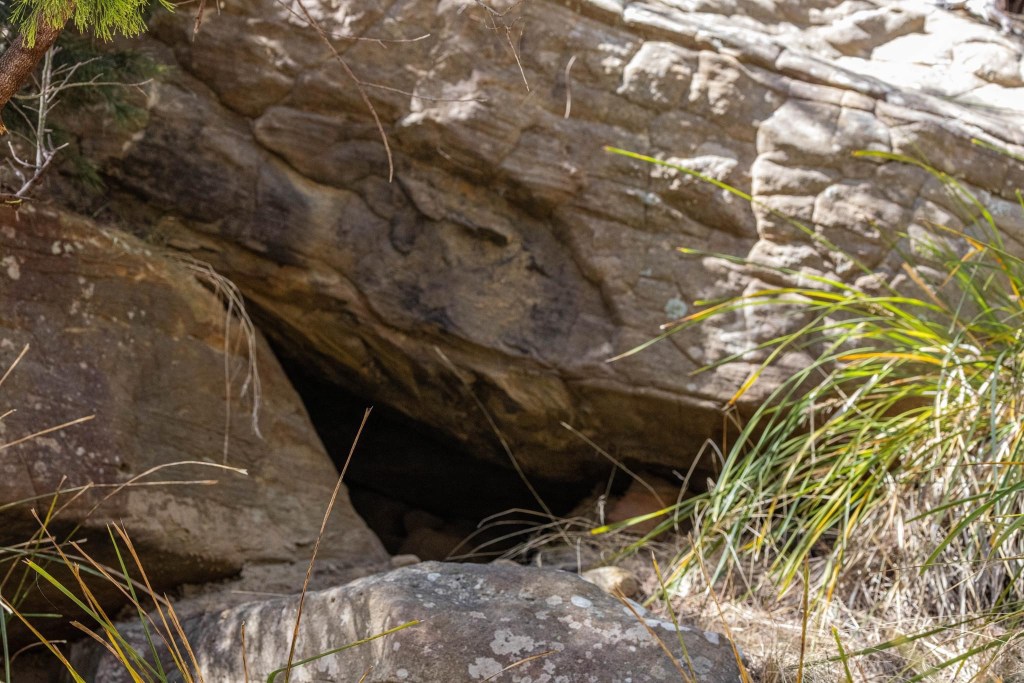
I finally arrived at the first cave. It is small with the larger ones above it. I did not continue up the rocky steps as they were covered in bush and stones and slippery. With no one around and no phone reception my sensible self kicked in. There was a makeshift bench I sat on and enjoyed my lunch. Then another shorter path took me back to the car park. I didn’t see a single bushranger but my imagination had them there, hiding their loot on the myriad of caves further up.
I really enjoyed the beautiful spring day out and now I need to find somewhere to go beginning with E that I have not photographed before.
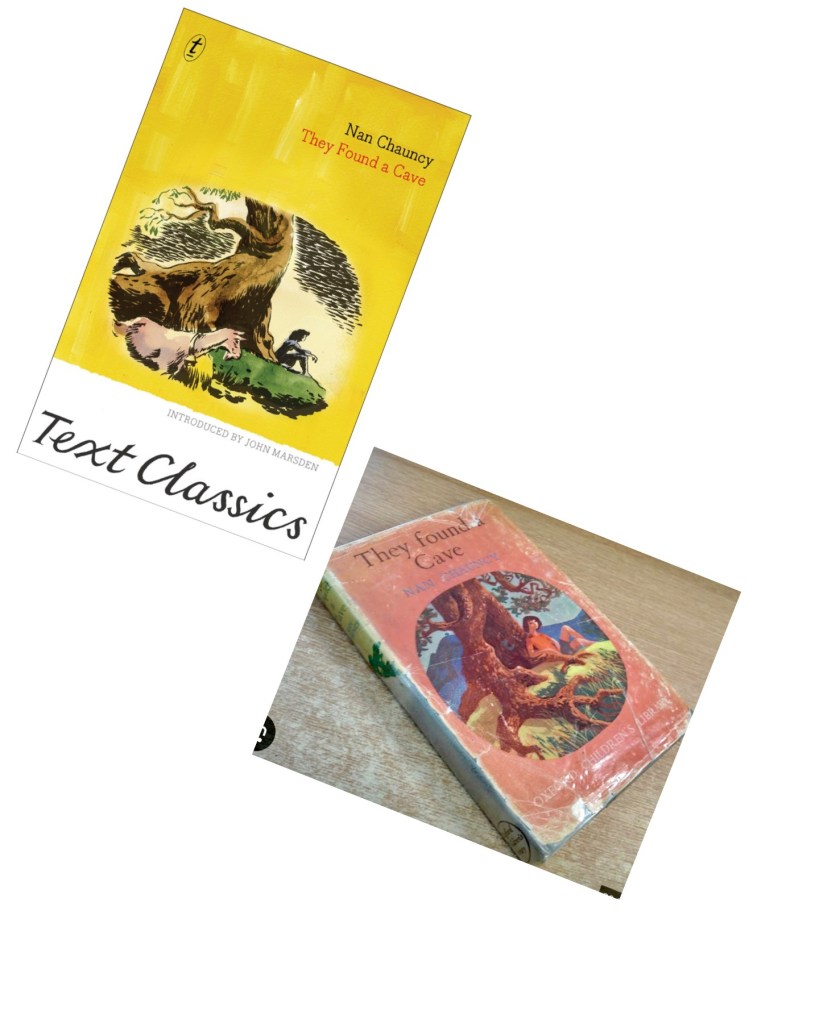
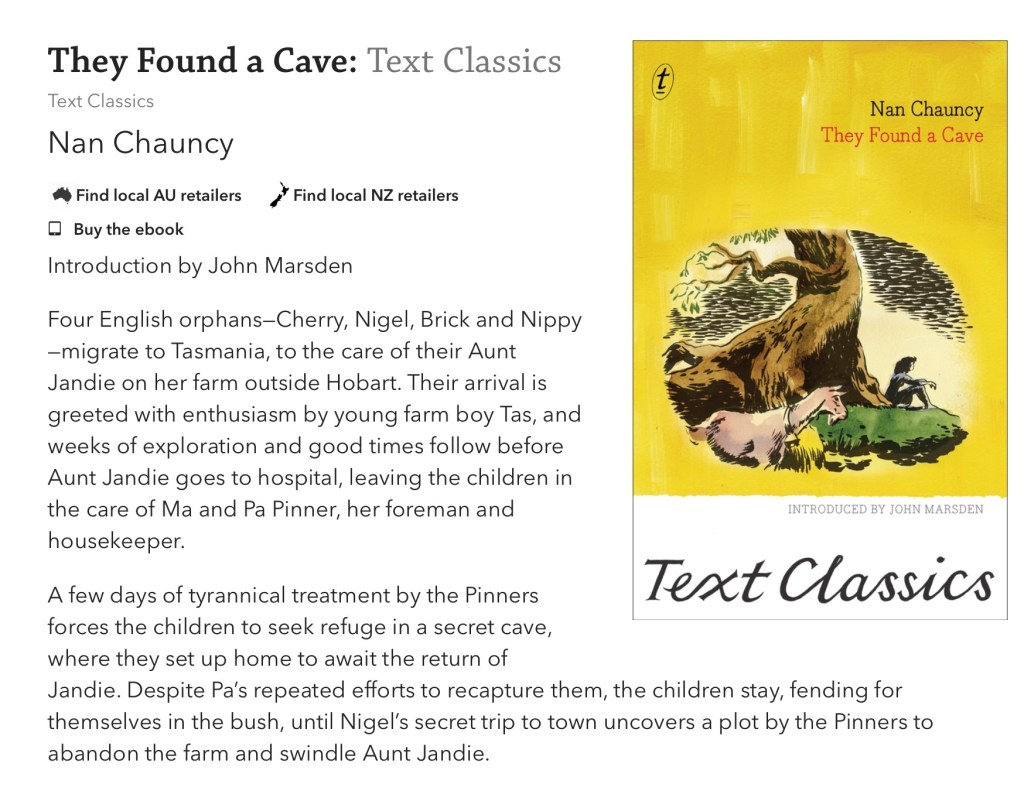
I read this book after visiting the Nan Chauncy house and property there earlier this year for the first time on a tour. The house is interesting. An old bush shack, very cozy in a humble but beautiful setting. The book was fun but very dated and some language that is not not PC.


I hope you enjoyed our Tasmanian day trip. Until next time 🌻🐾🐾🐾


What a wonderful place – thanks for sharing your photos of it, Pam!
LikeLike
Loved the photos and I love exploring in caves!
LikeLike
I’d not heard of this place Pam, and I don’t think I knew Nan Chauncy was Tasmanian, because while I know she was a very popular children’s writer, I don’t think I’ve ever read her. Great pics. I love blue tongues too and am going to miss our resident one.
LikeLike
I certainly did enjoy this photo-journey, what a gift to share with us!
I know I read something by Chauncy as a child, Tangara rings a bell, but I can’t be sure.
There’s a terrific book about a female bushranger called Bridget Crack which you might enjoy, it’s by Rachel Leary. I can’t be sure now whether it’s in this area that you’ve shown us, but it’s what I thought of as soon as I read that it was a haunt of bushrangers.
See https://anzlitlovers.com/2017/10/30/bridget-crack-2017-by-rachel-leary/
LikeLike
Your memory is correct. Tangara is the name of it. The only thing I would like about being a bush ranger is riding the horse! I will have a look at the link. It was such a lovely day. Look forward to more walks until it gets too hot. 🌞🌞🌞
LikeLiked by 1 person
I always enjoy your photographs, and your accounts of taking them. The bush looks much drier than I would have suspected for Tasmania. You always make me regret that my old SLR Sony camera seems beyond repair.
Nan Chauncy, now you bring her up, sounds familiar, but I can’t see that I ever read her.
LikeLiked by 1 person
I’m glad you enjoyed the photo. It was a lovely day that was far overdue. We had a tremendous storm last night at midnight. So much thunder and lightning which we haven’t heard in over a year probably. Just never happens. I love a good storm. Nan Chauncy wrote mostly for primary school children and her husband brought a group of school children out to the property in 1949 for conservation education. He is thought to be the first person in Australia to do so.
LikeLike