
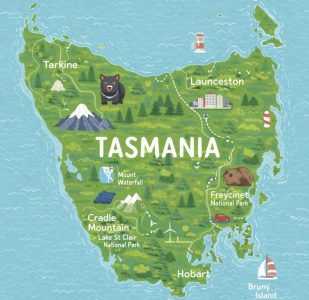
I belong to a small writing group that meets every Wednesday afternoon (except for the third one of the month.). We play with words, grammar and talk about commas for hours. It is always a good laugh. Our group meets for two hours, then we go for coffee. We usually have a topic for the following week or we can work on something we’re currently interested in. We rent a room from the Tasmanian Writer’s Centre in Salamanca.
Last year we played a bit with the Sestina. Wikipedia describes the Sestina as:
“A sestina (Old Occitan: cledisat [klediˈzat]; also known as sestine, sextine, sextain) is a fixed verse form consisting of six stanzas of six lines each, normally followed by a three-line envoi. The words that end each line of the first stanza are used as line endings in each of the following stanzas, rotated in a set pattern.”
I decided to write one about my dog Wally who passed away two years ago. We loved him dearly and he is still a part of our “talking” life.
First you must settle on the six words you want to use in the six lines and six stanzas.
I chose. Morning, Drive, Rain, Fields, Dog, Bed
Then I filled in the table that I needed to follow.

Finally I wrote the poem. It was a great deal of fun sticking to the formula. The original sestinas required seven syllables in the first line of each stanza and the rest of the lines ten. But that rule was relaxed as the years went on. I would like to try my hand with that formula but I was happy with this one. The final stanza must have three lines with two of the words in each line. My example is as follows. My tribute to Wally.
A Canine Sestina
On a cloudy Sunday morning
I decided to go for a drive,
Let’s leave early as to miss the rain
That’s forecast for later above the fields.
Will I travel alone or take my dog
“Come on,” I said,” Get out of your bed.”
My chunky boy get out of bed?
Who generally sleeps past morning?
Why did I think I’d take my dog?
The last thing he wants is to go for a drive.
He never dreams of rabbits in fields,
Though he doesn’t appear to mind the rain.
He loves his bath, the hose and rain;
Water never sends him to his bed
If coaxed he’ll chase birds in the fields
Evening time is better than morning
But he never wants to go for a drive
He’s always been a carsick dog.
I’ve never had a queasier dog
Who’d leave a car instead for rain
He doesn’t care about a drive;
He’s most at home upon his bed/
Each and every morning
He’ll be asleep, not running in fields.
Rabbits, birds and goats in the fields
Will never interest my little dog;
As I said, come Sunday morning
Though it’s pelting down with rain,
My dog runs through it from his bed
So he won’t be coaxed to go for a drive
The rattling keys signal a drive
And soon he’s off across the fields.
I’ve barely risen from my bed
When I must chase my dog;
And though it’s not a pouring rain
It is a very wet morning.
As my dog runs through the rain
Across the fields this morning
We change our mind about the drive and we go back to bed.

If you’d like to try your hand at this fun exercise or read more about it the Wikipedia link has a lot of information (here.)
 As one of the most respected small publishing houses in Australia, Magabala Books works to celebrate the talent and diversity of Aboriginal and Torres Strait Islander voices through the publication of quality literature. Magabala Books has released more than two hundred titles from a range of genres.
 I thought I’d have a poke around our State Library to see what indigenous publishers they stocked on their shelves. I have been slowly exploring them. This came up first off and as I checked it out I saw some beautiful children’s books. I noticed that one of them, Mad Magpie, written and illustrated by Gregg Dreise, won the 2017 Speech Pathology Australia Book of the Year in the Indigenous Children’s category. That is an association that was very dear to my heart years ago when I was working and I sat on their national committee as Vice President Finance for several years in the 1990’s. I remember when the book awards were established by the association but later forgot about those awards in my retirement years and was happily surprised to see it again. I had to check it out and see what it is about.
 Mad Magpie is a story about dealing with bullies.
 The book is beautifully illustrated with Indigenous art and I am sharing a few pages with you. Gregg Dreise has written and illustrated other books for children and I see that Silly Birds won this same award in 2015. I have placed two more of his books on my wishlist at the library and will look at them after I return from my March travels. I enjoy the stories of the Dreamtime as they explain the Indigenous versions of nature. They are beautiful tales.
 I will continue to explore this publishing establishment as they have a range of books for children through to adults. Our library seems to have quite a few of their books.

 What a week this has been. I have had a quiet week messaging back and forth with photos, information and encouragement with my brother and sister as our mother died. It was peaceful and we are all comforted by the wonderful care she received. She would have turned 92 next month so she had a long life. We also caught up with many relatives I have not heard from in years and new, younger ones I did not know. Family deaths tend to do that. That has been lovely.
 The short story I drew in the Deal Me In Challenge (2 of Diamonds) was The Rainmaker from the Tibetan Folk Tales book. The timing of this story was lovely as it is quite a spiritual book of stories in the Buddhist tradition and was a gentle read. Zor is an orphan taken in by a monk for life training. The story told of their life in the cave, with their meals from herbs as rain falls around them. (comforting right?). The old monk is a wise Rainmaker and is able to control the clouds and the weather. At times he is called to the Dalai Lama’s palace to monitor the storms as to protect his beautiful garden. The story revolves around the lessons he teaches to Zor and how Zor copes with his own successes and failures as he inherits this responsibility once the old Lama dies. I enjoyed it immensely.
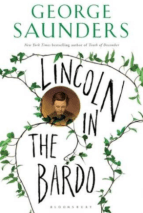 On the other hand, I began the book Lincoln in the Bardo as a Kindle read/audio. It is irritating me beyond belief and I’ll be lucky to finish it. I know, I know. Man Booker prize winner of 2017 and all that. I really should stay away from this prize. I heard a review about how wonderful all the voices were on the audio version. There are around 100 actors reading various parts of the ghosts. For those unfamiliar, it is a story of Abraham Lincoln and his young son Willy who died at a young age. Lincoln in his grief visits him at the cemetery and there are all of the ghosts who live there with their comments. Lots of flashbacks to Willy’s life.
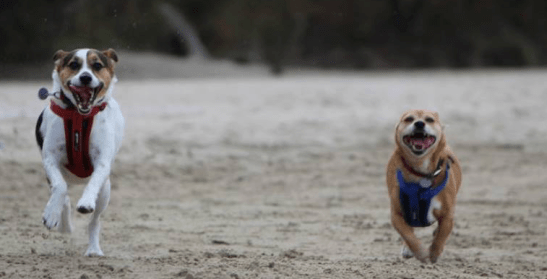
 On another lovely note…yesterday was a beautiful summer’s day and I took the dogs to the beach. We call it the Big Beach as it is bigger than the dog beach we normally go to. As it was a weekday, there was hardly anyone there. The airport runway ends at this beach at a 90 degree angle so the planes were going overhead in front of us as we walked.
 Travellin' Penguin